Tuesday, 17 July 2012

Fairie-ality


Once upon a time, during a balmy summer in the Kent countryside, I tiptoed carefully through gardens, paddocks, forests and orchards in search of bark chips, ivy vines, soft white feathers and fallen petals; I was hunting for the materials to create my very own fairy dress, inspired by Fairie-Ality from the House of Ellwand...

© David Ellwand, 2001

I must have been about 13, but I so vividly remember the way the excitement and passion bubbled in my stomach, it might as well have been yesterday. I wasn't just keen to make a dress: for one month only I was an escaped Londoner, and I was convinced not only that I could make fairy clothes, but that I could find a little someone to wear it whilst I was in the countryside. The chances of finding a fairy in the Big Smoke seemed slim. 

Some people will laugh to think of a teenager believing in fairies, but I grew up on a diet of fairy tales and adventure stories, and none of them ever took place in a city. I associated the countryside, any countryside, with the storybook worlds of my youth.

I never did make that dress. My desire was far greater than my ability (I could just about sew a felt purse together at that age.) But the magic was - is - still there. All you have to do is open the 'catalogue' and let it immerse you.

Recently I discovered David Ellwand's other related work - the Fairie-ality Style book of interior design. This caused all the above happy memories of nature-treasure hunting to come back to me, and when I found out he lives in West Sussex, one county over from where I live, it made me want to embrace the countryside around me so much more, and use it as inspiration in my work (hence quite a few previous posts about how inspirational nature really is.)

Click below to see more images from Ellwand's website, which I urge you all to explore...

Friday, 13 July 2012

Old Oak & The Maiden

After my last post, it seems an appropriate time to say that I have written a 'new' fairy tale! The driving force behind it was the question, 'what would happen if someone in need refused to accept magical help?' After discovering a piece of artwork that so brilliantly illustrated my story (which I blogged about here) I decided that I had no excuse for not finishing it!


I have no doubt that people will be able to see some of the stories that have inspired me, including older versions of Cinderella, the legends of King Arthur, The Tinder-Box...the list could go on. It's a mish-mash of traditions, but hey, there's nothing wrong with that, right?


Old Oak & The Maiden is currently being considered for submission, but I believe I can post an extract without it causing any harm:
     At the very heart of the forest, where no stars could be seen through the treetops, where no animals dwelled and where silence was as thick as honey, she stopped. She had arrived before an ancient oak tree, and mustering the final dregs of her energy she curtseyed in front of the thick, gnarled bark, before collapsing onto the floor and relinquishing into sobs. She had shed the last of her grace.
     Time expanded and contracted, and moved in the mysterious patterns called forth by solitude. She didn't know how long she stayed curled up amongst the dead leaves and her dirty dress, but enough time had elapsed for her to fall quiet once more. 
     The tree spoke to her at last.
     'Fair maiden, you did not come all this way to simply cry at my roots. Tell me your troubles.'
Inspiration from nature: Friston Forest, October 2011 

Wednesday, 11 July 2012

Same old, same old


Christie at Spinning Straw Into Gold recently posted interesting questions about whether traditional fairy tales still naturally occur, and whether there is such a thing as a new fairy tale (I left my answer in the comments).


This got me thinking about writing in general, and about how we so easily say 'this has been done before' when we see a story that we vaguely recognise. Well, of course it has been done before. There is a theory, somewhere, that there are only about 13 different plots that can be used to make a story - but how many millions upon millions of stories are there in the world? How many books do you recommend to people, and say how great they are? 


If we think broadly about the subject matter in stories, we could link Twilight to Pride and Prejudice to Romeo and Juliet if we so choose. The real distinction comes from writing styles, format, language, and yes, there are some stories that really are like other stories (Mills and Boon is a whole industry based on the predictability of the plots!) but what I find interesting is that people are a lot more judgemental about similarity in books that in, say, fashion or music. 


In fashion, its 'cool' to look like everyone else, and vintage fashion is just wearing the same clothes that were worn years before. And as for music, Will.I.Am uses the same notes as Smashing Pumpkins, as Girls Aloud, as Mozart: there are only so many notes, after all. 


Perhaps this judgement comes from the personal investment we put into books. We spend money on them, then sit down specifically to give our time and undivided attention to them; if we don't invest this care, we don't 'get into it' and are unable to follow the plots. When we read a book, it is an experience that isn't shared by anyone else at the same time. 


Is this deep personal connection what drives the need for newness, for originality? Is the investment of money and dedicated time what makes us turn our noses up to story lines that seem familiar? I'd be interested to hear other people's thoughts on this...

Wednesday, 4 July 2012

Surreal, unreal

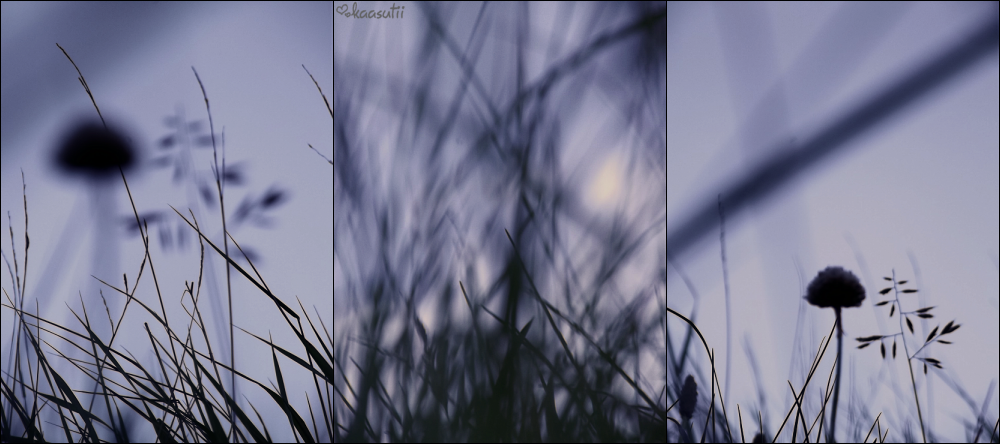
This morning I woke up in that surreal, unreal time, when it was light but not yet day. It would have been the morning version of twilight - does this have a name?
I emerged into a still world of grey light at 4:45 AM, and I stood in the garden breathing in the sweet, early-morning air. I heard the first bird make a sound. It soon became a peace-shattering cacophony of noise, which definitively bridged the gap and declared it day. 


I savoured my moment in this transitional time. The rain overnight had encouraged dozens of slugs and snails to come out and eat my plants, but it didn't bother me as much for some reason. I can't blame them; dew-covered shoots and leaves look far more appealing than dry ones. It felt magical to stand surrounded by such slow forms of nature, which seemed incredibly active and busy in relation to the stillness everywhere else. There was silence from the tracks and from the road - the trains had not started running, and I couldn't hear a single bus or car despite living on the main road into the city. And no drunken shouts. Just the growing din of seagulls to remind me that I do in fact live in a big coastal city.


It's as if the world was tucked safely in its bed, and there was time to discover its secrets in this little chink of time between night and day...
by kaasutii @ dA
I don't find 'the witching hour' particularly significant, but this time seems to hold an infinite amount of power. It played tricks with my mind. I thought I heard bells or wind chimes, but the air was still, and none of the neighbours have any hung up. I'm sure I smelt toast when I got out of bed. And were those little footprints on the dew-matted grass?


It has been a long time since my mind has felt so active, or so inspired. I should not have gone back to bed. I should have stayed up and written more than I did. Whilst everything around me was still I felt so alive, and like I was meant to be there experiencing it all - I wrote with ease, with instinctive voice, and with honest passion. Nothing felt forced. I didn't feel worried, stressed, or like a fraud; everything about me and what I was doing felt natural. It felt right.


Some people say you should write first thing in the morning. Others say at night. Others say whenever you have a free moment in the middle of your hectic day. I say: write when you feel the magic, because you will be the most true to yourself.

Friday, 29 June 2012

Oh dear, I can't stop writing in blank verse

Fantastique Unfettered is still open to submissions for its Shakespeare Unfettered issue. I wanted to submit a story I wrote, but its far too short (I have unintentionally written my first ever piece of flash fiction.)


by Schnellart @ dA
I've written a piece about Ophelia, under water. I read and re-read the scene where Gertrude tells Laertes how his sister died, and tried to use similar images, and even mention plants that Gertrude talks about. Then, when I'd written a first draft, I thought about making it a real challenge to myself...so I re-wrote it in blank verse.


Good grief, I had no idea how much it would mess with my head! I don't know how Shakespeare could have held a normal conversation after a long stint writing - my brain was translating everything, and all I could hear was the iambic pentameter rhythm pounding in my head. I've experienced this before after reading Shakespeare, but I had no idea writing in blank verse would do the same thing; I thought my head would be pleased to be shot of it! Isn't it described as the rhythm most suited to the English language? Something like that - maybe that's why my brain couldn't let go. 


I would even recommend it - it was a fun sort of challenge, after all, how often can we say we've tried to write like Shakespeare? And if anyone submits a piece I would love to hear about it, or about anything Shakespeare-related that inspires/amuses/means something to you...

Tuesday, 26 June 2012

Never trust a talking tree

I've just noticed that a whole load of posts I'd written and scheduled to go live have somehow vanished from Blogger, which means that I am once again behind on posting (pretty ironic considering my recent warning about how much I have to talk about, haha!) 


I think there's a lesson here about backing up my work. Alternatively, there's one about making the best out of a bad situation. Despite feeling completely ineloquent and harried right now, I'd like to apologetically go for the second option and share something positive that came out of my day: I came across a beautiful picture that shocked me, because it perfectly encapsulates a story I'm working on:


by jerry8448 @ dA
(My tree even offers a girl a flower...) I would encourage everyone to explore jerry's gallery on deviantART, the scenes he creates are magical, and the attention to nature's details is wonderful.


I think lots of people are inspired by pictures or other creative media. Personally I find them most helpful for describing landscapes or buildings, but they inspire me most when I come across something that conveys a mood or feeling very strongly. My starting point for writing is often a feeling which is then attached to a situation or character, rather than a character, place or situation that I then have to find feelings for (if that makes sense).

I recognise that this often causes problems because my plots don't move at a decent pace, or my characters don't develop enough - I just get so caught up in the feeling! But I suppose, in the end, it doesn't matter where inspiration comes from as long as everything else fits together and works well, and the end result is a good story.


But this picture could be the find of a lifetime - like he was illustrating my thoughts...

Wednesday, 20 June 2012

Break, break, break


Break, Break, Break
 
Break, break, break,       
On thy cold gray stones, O Sea!
And I would that my tongue could utter         
The thoughts that arise in me.
 
-Alfred, Lord Tennyson 
When I first moved to Brighton two summers ago I spent so much time by the sea. I felt so free and relaxed listening to the waves, and it seemed like my best creative ideas popped into my head when I was in the water.  Perhaps it was inspired by change, but I also think that the raw power of nature played a part. Recently, it has been green spaces that draw inspiration from me; parks, gardens, forests...earth instead of water. 


I want to spend more time outdoors, now. I have been reading stories that draw so much inspiration and feeling from the landscapes in which they are set, where characters live and breathe their surroundings, and I've missed having that connection. It makes me feel alive; and reading it in books makes the characters and the stories come to life (and, frustratingly, they feel like they are living more than me, sitting with a book curled up on the sofa with a cup of coffee!)


A few examples off the top of my head of some books that I think do this more than others:

  • Wide Sargasso Sea - Jean Rhys (various Caribbean locations)
  • Wuthering Heights - Emily Bronte (Yorkshire Moors)
  • When God Was a Rabbit - Sarah Winman (Cornwall)
  • The God of Small Things - Arundhati Roy (Kerala, Southern India)