Showing posts with label fantasy. Show all posts

Sunday, 11 September 2016

Terri Windling's Tolkien Lecture

After my last post I thought it would be a good time to share Terri Windling's incredible talk for the fourth annual Tolkien lecture - although I'm sure many of you will have seen it already! 

She delivered her lecture at Pembroke college earlier this year and used the platform to discuss the state of fantasy literature today, focussing in particular on the lack of connection modern works, and modern people, forge with the land. Her words deeply resonated with me; the books I sought out as a child, the ones I seek out now and much of the writing I produce “behind the scenes”, if not in public, seeks this essence of connection to place. I could try to explain further, but I’m sure you would much prefer to hear Terri’s incredible lecture yourselves:


Please don't forget to treat yourselves with a visit to Terri's blog, Myth & Moor!

Wednesday, 27 November 2013

C.S. Lewis - 50 Years


Last week, on 22nd November, a memorial stone was dedicated to C.S. Lewis on the 50th anniversary of his death. The memorial is in the Poet's Corner of Westminster Abbey, alongside the likes of John Keats, T.S. Eliot and William Blake.


C.S. Lewis is a writer I have a very personal attachment to, beyond my deep love for his work: my Opa (grandfather) in South Africa used to send me books every birthday and Christmas, and he started sending me the Chronicles of Narnia while I was still very young. Sadly, he passed away when I was just seven years old...and the series was never completed. In fact, I didn't complete my collection for many years. I was searching for a seventh book to match the issue of the other six - it just had to have the same cover style as the others for me to feel like it was properly completed.

By the time I was 14, I had given up the search. I bought a copy of The Last Battle, not having read it before, and found that it was about death, and moving on. It couldn't have been more appropriate to finish the strange, tangled journey I had been on with this book.

So thank you, C.S. Lewis, for bringing Narnia to life. And thank you Opa for leading me to the wardrobe.


Thursday, 14 November 2013

What the Woods Want

When we close a book and put it away, how can we see how vast the world contained inside truly is?

I have a peculiar relationship with the novels of Diana Wynne Jones. I read a fair amount of them as a child, and I remember they had me hooked straight away and kept me engaged from cover to cover; they were magical, with fascinating storylines like no other, and there were a lot of surprises and twists near the end. But if you asked me, I wouldn't be able to tell you what a single one was about.

Why? I honestly have no idea (I like to think I have a pretty good book memory). So I've dug my old books out of storage and made a promise to read them all and love them again. And to remember why. I've already made a start; I've read Hexwood and wanted to share a rather beautiful sentiment from the very end of the novel.


The book doesn't sit comfortably in either the fantasy or sci-fi genre, as there is wood magic and mythical creatures as much as travel through space and time. But as the story draws to a close and the ends are tied together, the predominant setting, the woods, will not let the characters out until it has been granted a gift for all that it has been through:

'You told me the Wood can form its own theta-space and become the great Forest,' Mordion said to him. 'Does the Wood only do this when a human being enters it?' 
'I had not thought of this,' said Yam. 'Yes, I believe that when not reinforced by my field, the Wood requires human assistance to change.' 
'And not all humans will help,' Mordion said. 'I think what the Wood is trying to tell me is that it requires its own theta-space permanently, so that it can be the great Forest all the time, without having to rely on humans.'

I'm sure we've all experienced something like this, when we walk through the woods and it feels like it goes on forever, like it's the most magical place in the world and can't possibly be just a 20 minute drive from home. Diana Wynne Jones' Woods feel the same thing, and want to experience this vastness and greatness without needing a person inside to believe it into existence. 

I can imagine the same would be true of books. When we finish reading a great story we carry the world it created inside of us, whether it's the bygone England of Austen or the dystopian England of Meg Rosoff's How I Live Now, Middle Earth or Narnia, or the anyplace and anytime of fairy tales. How huge, how magnificent, and how in the world can all that be in something small enough to carry in a handbag?! 

We don't need to be inside the book, physically turning the pages to bring its world to life. There is a special relationship between book and reader that creates an everlasting world after a single union, which doesn't exist until the book has been read, and afterwards exists in both.

As I continue to re-explore my collection of Diana Wynne Jones novels, I fully intend to make sure her worlds continue to exist in me as well as the book. Let's make this magic happen!


Tuesday, 29 January 2013

When Fantasy Left the Forest

When fantasy left the forest...so did we.

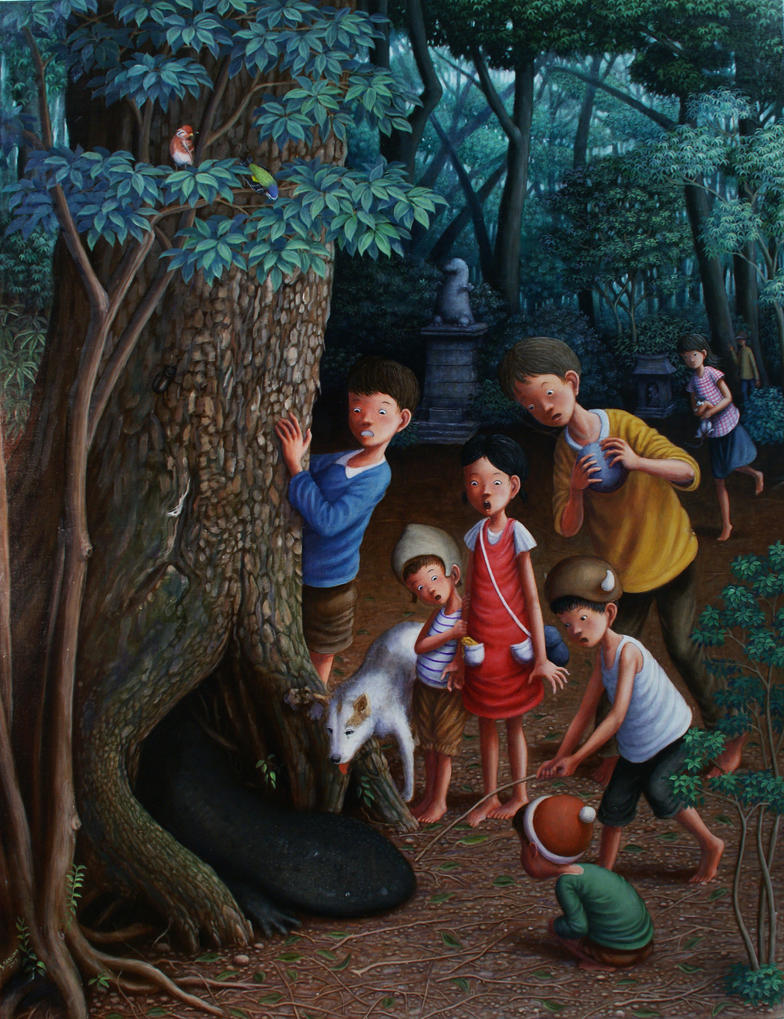
'Inviting forest' by perodog @ dA
Looking at the connection between nature and happiness, and the books that get us outside...

One of the most poignant discussions for me in Gossip from the Forest was about the amount of time children are spending outdoors:
We are doing something very alarming to our children - and, making it worse perhaps, we have fooled ourselves that we are doing it for their sake, for their safety. The amount of unsupervised time outside the home that young people get to enjoy is being reduced year on year (the average child has lost a whole hour a day already this century). (1)
In 2007 Unicef published a report that stated children in the UK are the unhappiest of all the economically developed countries. Despite children themselves stating that 'having plenty to do outdoors' would make them happy, their parents felt under pressure to buy them the latest gadgets and gizmos instead (read The Guardian article on this here). The lack of connection to nature, or 'Nature Deficit Disorder', has made our country miserable. This worried David Bond so much that he set up Project Wild Thing and gave himself the title of Nature's Marketing Director, thinking that Nature needed a helping hand in getting children back outside. He created the Wild Time App, featuring a wide range of nature based activities that can be done in the time you have available, whether it's 10 minutes or 2 hours. The National Trust has also provided a list of 50 things to do before you're 11 3/4.

'Exploration' by perodog @ dA
There are numerous reasons for this deficit, but Maitland identifies a key factor: the books children read these days aren't relevant to the natural world around them.
Interestingly, we have also abandoned another genre of literature, one which encouraged children to see themselves as capable on their own in the wild. There is a sort of novel for younger readers that was immensely popular up until the last quarter of the twentieth century and that has now well-nigh disappeared: stories of adventures in which children are on their own and deal with problems under a veneer of realism; novels like Swallows and Amazons or The Famous Five... (2)
Looking at the shelves in bookshops I would not have imagined this myself; Enid Blyton seems to be a pretty permanent fixture at least. In 2010 The Famous Five publisher tried to boost sales of the series by modernising the language, although they claimed their sales weren't suffering before they took this action. Perhaps this is the problem, then: relevance to the modern world. Maybe the child is too harsh a critic to really believe it possible that parents would let their children go off alone on camping trips like Julian, Dick, George and Anne do. Suspending disbelief to make this seem credible would then make the book a fantasy tale rather than an adventure story...would it not?
We have kept the magical element of fairy stories in modern books for young people; fantasy worlds are now the location of adventures and moral combat. But we have abandoned the immensely reassuring realist element of these old tales: the forests are dangerous but you can survive; use your own intelligence and courage and you will come back safely. (3)
The wonderful thing that fairy stories create is this idea in the back of the mind that when you walk through a forest, something magical might happen to you. There are few other stories I can recall from my childhood that give me this sensation when I walk in the woods, or indeed in any other natural place.

So, do we need to bring the magic back home? Is this the challenge of the modern writer, who cares about magic, who cares about nature, and who cares about the wellbeing of children? A quick browse of the list of current children's bestsellers and upcoming releases tells me that most of the stories are fantasies or mysteries set in the city (often with supernatural creatures prowling the streets at night). I'm not surprised. Ten years ago when I was a teen, finding a new book set in the countryside felt like a rarity even then. Maybe this can be my challenge as a writer. And a challenge as a reader, to find these rare jewels - any suggestions would be most welcome, please share them with me in the comments!

'A tree of a salamander2' by perodog @ dA
Related posts:
Woods between Worlds

(1) Maitland, Sara, Gossip from the Forest, (London: Granta, 2012), 98.
(2) Ibid., 104.
(3) Ibid., 105.

Tuesday, 15 January 2013

Woods between Worlds

This is the first post in what I hope to be a series of short articles relating to forests and fairy tales, inspired by Sara Maitland's writing in Gossip from the Forest. In this post I look at the links between the 'casual magic' of the forests and their setting as a place of transition for characters in and beyond fairy tales.


Source

Woods between Worlds: Magic and Transition in the Fairy Tale Forest


There is magic between the pages of fairy stories. We can't always see it, but it's there. This magic will often be found and felt amongst knotted trunks and snaking branches, between the barriers formed by tangled undergrowth and a dense, leafy canopy. It will be practised by plants, animals and people (mostly old people) but never, on any account, will it be sought for or used by you.

'Magic is something you are given, something that is done to you or around you,' Maitland explains in Gossip from the Forest (1). Have you ever set foot within the boundaries of a forest and felt a change in atmosphere? You cannot walk into a forest and look for magic, but the knowledge that there is magic there, and that it might cross your path, definitely gives the forest an atmosphere unlike any other natural place, heightened by the fact that you are on alert for its sudden, random appearance. It could happen to anyone, any time:
I know of no other cultural tradition that treats magic in this odd casual way. I believe it is a distinct forest magic that grew out of the experience of living in woods, where you cannot see far ahead and where things change abruptly. (2)
This casual magic does seem to have one rule, however:
The magic comes to them, without solicitation or endeavour. It is usually in the form of assistance, not solution: they have to use the magical gifts they are given, and they have to continue to work or suffer or both. (3)
If magic was the goal, the forest would be the destination. But magic finds you in the forest: you enter seeking your fortune, escaping abuse, looking to prove yourself, and you leave armed with the power to achieve your goal. The casual magic of the forest is linked to the transition of the character's ability or status, an emotional or physical turning point in their journey; and this role of the forest is one that has lingered in literature, beyond the realms of traditional fairy stories.
Source
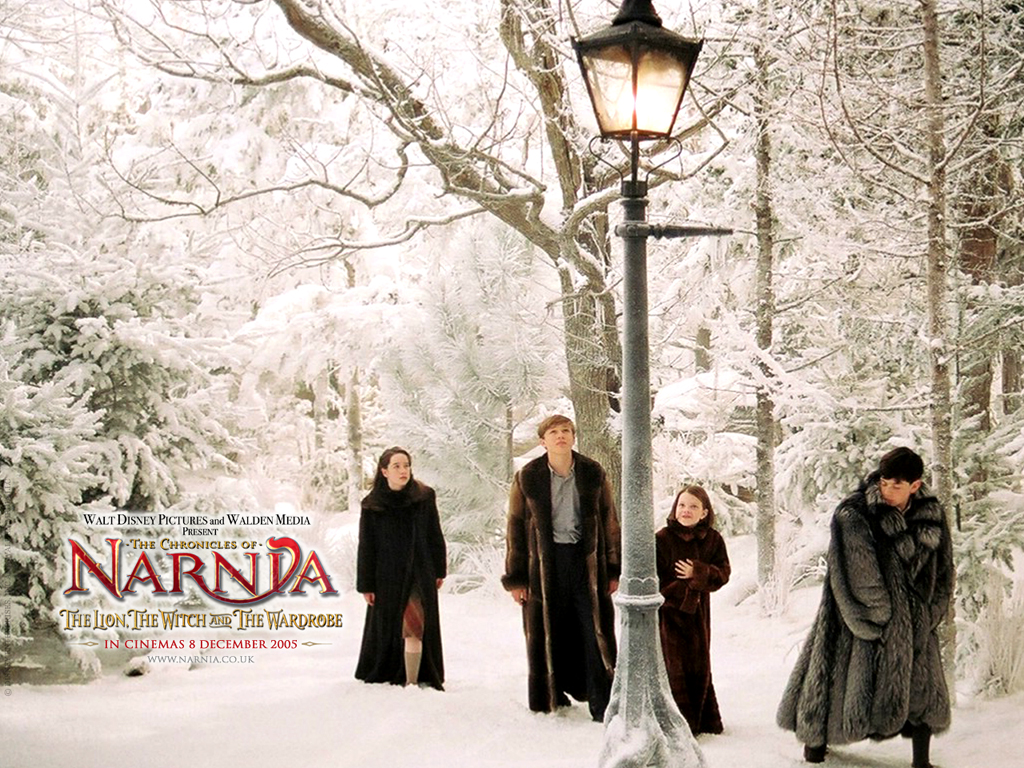
In C.S. Lewis' The Lion, The Witch and The Wardrobe, Peter, Susan, Edmund and Lucy enter the world of Narnia through the wardrobe and find themselves in the woods. It contains magical creatures (here we meet the faun, Mr Tumnus) but also a familiar item from their own world: the lamp post. The imagery provided by this infiltration from their world highlights the transitional nature of the woods. When Lucy and Edmund spend time alone in Narnia they do not wander far, but Lucy's time alone in particular empowers her and provides her with enough understanding of the creatures and rules of the land to motivate the others to keep travelling onward on their quest.

Lewis also created 'the wood between the worlds' in The Magicians's Nephew. It is, as its name suggests, the place Diggory and Polly appear when they leave their own world, containing the access points to other worlds. It has a peculiar effect on the children, who find it hard to hold on to memories of who they are and where they are from. Diggory claims, 'It's not the sort of place where things happen. The trees go on growing, that's all.' (4) This, I believe, is a common misconception of forests in our post-industrial world. I could take a guess and say that Lewis was commenting on the way we use our forests now, no longer for our livelihoods but for occasional days out...but, really, in the context of the book nothing needs to happen there: it is just a transitional place containing magical portals to access other worlds.
Source
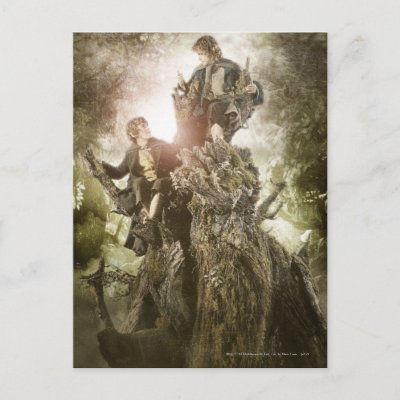
Tolkien's Middle-Earth universe does not see characters travel between worlds, but immerses the reader in an alternate universe that still uses the forest as a magical, transitional space. Immediately upon leaving the Shire, as they flee the black riders, the four hobbits find themselves in the Old Forest, marking the end of normality and familiarity and the start of one of the most epic adventures in literature. Hobbits believe the Old Forest to contain trees that are 'awake', and later on Merry and Pippin come into contact with the Ents (tree-herders) when they find themselves in Fangorn Forest. This, again, marks a change in status for the two hobbits, from danger to safety, and from an old mission to a new one.

I could go on (5). There are forests in all types of literature, for all ages, all showing the impact the fairy tale forest has had on them. This is also abundantly clear in Disney films, even though they have moved away from the traditional stories. In
 'The Princess and The Frog,' (6) Tiana and Naveen find themselves in a foresty bayou where they must face up to their personality flaws and learn to co-operate (as well as find a good witch); and Carl and Russell from 'Up' make an early stop in their balloon adventure in the jungle, where they better learn how to get along and meet other magical members of their group. 

One of the points Maitland wanted to make in her book was that forests and fairy tales grow and evolve together. Our world has changed dramatically over the years, and even though we are not getting out into these legendary places of mischief and magic like we used to, and even though there are factions trying to tell us fairy tales are bad, the legacy of fairy tales and forests continues to inform our lives, whether it is through films, books, music, or even just a vague feeling that causes a shiver down our spines when we walk through the trees. I think the clue is in the first line of every story: once upon a time. Once upon a time there were fairy stories and forests. There were, there are, and there will always be movement, change and magic in the world.

Related Posts:
When Fantasy Left the Forest
Exploring the Forest


(1) Maitland, Sara, Gossip from the Forest, (London: Granta, 2012), 157.
(2) Maitland, 158.
(3) Maitland, 157-8.
(4) Quotes sourced from ePubBud as I don't have my copy of the book to hand. Unfortunately this means a lack of page numbers, but the quoted text is from chapter 3.
(5) I considered all the transitional and magical elements of Harry Potter's various trips into the Forbidden Forest each year, but something about it wasn't quite right...I then realised it was because there was a broken rule: Harry Potter had his own magic, and sought magical knowledge. Despite the forest being used for various transitional purposes, the magic was not casual.
(6) Although you could try and draw a parallel between the classic fairy tale, I find the Disney film to bear very little resemblance. However, Tiana's violent dislike for Naveen does recall my preferred ending to the story, where the frog is turned into a prince through being hurled against a wall by the princess, rather than from a kiss. 

Saturday, 1 December 2012

Mirror Dance is up!

The Winter 2012 issue of Mirror Dance has gone up, and I'm thrilled that my short story, Goodnight, Sweet Lady, has been included in this issue! It's also fantastic to be published alongside L.C. Ricardo of Spinning Straw Into Gold, whose writing on and dedication to fairy tales I greatly admire. Make sure to have a look at all the wonderful work published, and if you like what you read then please leave a comment, however brief, as I know it will be appreciated by the authors.

Have a lovely weekend everyone, and enjoy the snow if you're lucky enough to be in the right part of the country for it!

Wednesday, 19 September 2012

Sussex Centre for Folklore, Fairy Tale and Fantasy

If you live in the south of England you may be aware of the Sussex Centre for Folklore, Fairy Tale and Fantasy, based at the University of Chichester. They frequently hold events that will interest any fairy tale fans out there, and this is the latest one:

Sex, lies and Videotape: The brothers Grimm experience
Wednesday 10 October 2012 5.15pm-6:30pm, Cloisters, Bishop Otter Campus,University of Chichester**Professional story-teller Janet Dowling presents the story of how the brothers Grimm cleaned up their act for contemporary readers … and what Disney did next
.
Their advisory board is made up of big names in the global business of fairy tales, including Jack Zipes, Maria Tatar and Marina Warner. There are a couple of videos of lectures on the site, and a link to buy their journal, Gramarye.

It has occurred to me that I am only about 1 hour and a £13 train fare away from Chichester, and that I should definitely make use of such a wonderful centre that is practically on my doorstep!

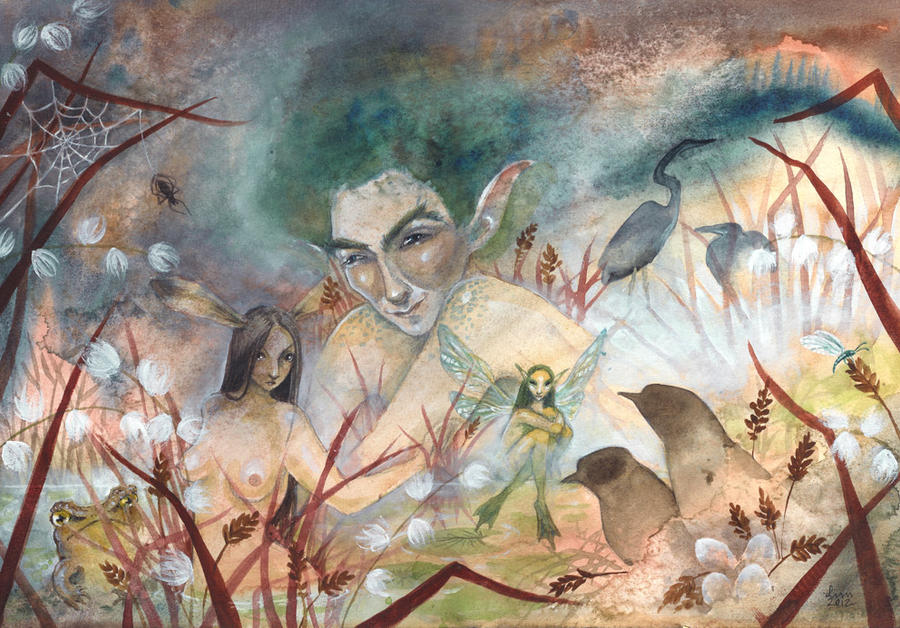
Marshland by liselotte-eriksson @ dA

Sunday, 22 January 2012

The Hobbit

Have we all seen the trailer yet?!


Tolkien was a genius, and I'm glad Peter Jackson had the ambition to bring that genius to a new audience on the big screen. I'm excited for the release, especially after all the stopping and starting the production went through, and it will be nice to see more of Bilbo.


Now seems to be a great time for fantasy novels to appear on the big screen, as special effects and animation have become so advanced; the magic can be recreated without awkward distractions, such as seeing the cables allowing a person to 'fly', or an ill-fitting mouthful of vampire fangs that probably wouldn't even pass quality control in a joke shop (Christopher Lee...)


Obviously a lot had to be cut out of LotR (and there was nothing special effects could do about that!) but I think it is impressive how well Jackson managed to use the stories to make such thrilling and enchanting films. Not all books are in such safe hands, and some real treasures have been ruined by bad acting, cheesy sfx and/or mutilated storylines. I'm sure we all have our pet hates, especially if the book meant a lot personally. Mine is The Chronicles of Narnia: The Lion, The Witch and The Wardrobe. But...that's a story for another time.


I know I have nearly another whole year to wait, but I don't think any film will get me as excited as The Hobbit in 2012.


Because I'm feeling excited, a bit geeky and nostalgic about the time I read The Hobbit under the duvet with a torch as a kid, I'm ending this post with my favourite of the riddles in the dark...


This thing all things devours:
Birds, beasts, trees, flowers;
Gnaws iron, bites steel;
Grinds hard stones to meal;
Slays king, ruins town,
And beats high mountain down.