Showing posts with label review. Show all posts

Thursday, 3 November 2016

How did Arthur pull the sword from the stone?

The books I am picking up these days are not entirely different to the ones I would reach for before, but they certainly have more of an environmental or eco-spiritual bent to them; which is why I was so surprised to be confronted with a new theory about King Arthur in a book about hunter-gatherers!

Ffyona Campbell’s small but beautiful book, The Hunter-Gather Way is part memoir, part anthropological investigation, part thought-experiment and part field guide. It is a quick read but an absolute treasure, with more to take away than in many books ten times its size.

Campbell reached the subject of King Arthur after first considering the purpose of Stonehenge, which led her on to Druids. Although discovering the Druids wouldn’t have had anything to do with the construction of Stonehenge, she did find out that they first learned how to extract iron out of iron-ore at the headwaters of the Danube, the land of the Celts. She tried to imagine demonstrations of the process to a new observer, and how much it would look like a fiery magic that resulted in drawing blood out of a stone!

And then…
“This led me to thinking about King Arthur.
King Arthur lived much later, just after the fall of Rome, when England was about to be invaded by all and sundry and so it needed defending. The call went out for: ‘whoever can pull the sword out of the stone will be the next King of England.’ I realised they didn’t mean, ‘whoever can pull this sword that’s sticking up out of this stone,’ they meant, ‘whoever can get iron out of iron-ore to make swords and so defend England will be the next King.’
And why would Arthur have been able to do this as opposed to anyone else? Because Arthur’s teacher was Merlin, and Merlin was an old Druid.
It makes sense too that Excalibur was found in the lake because the Celts, all those years before, had thrown beautiful iron items into the lakes and rivers to give thanks for where they had worked out the technology at the head waters of the Danube.”
Possible? I’m not sure. But a wonderful idea nevertheless on a subject I will never grow bored of!

You can visit Ffyona Campbell’s website here.


Related King Arthur posts:

Saturday, 27 August 2016

The Mists of Avalon


I’m late to the party for this book. In some ways it’s unsurprising - it was published before I was born... - but considering how much I love to absorb anything with even the merest hint of Arthurian legend about it, I can’t believe I didn’t pick it up sooner.

But everything in its time, and in its place. I had to read the series chronologically after accidentally starting with The Forests of Avalon two years ago. This is where my OCD twinges come into play: once I knew what I had started, there was no way I could read the final book before the second! Ultimately, however, I think this served me well.

The Forests of Avalon depicts life in Pagan Britain at the start of Roman rule, and we see how the line of Once and Future Kings came to be, through the union of a Roman soldier and a High Priestess. Lady of Avalon follows the descendants of this union, the royal line of Avalon, hurtling through time as Roman rule takes hold and the threat of the Saxons grows. Crucially, in preparation for Mists, we see the divisions growing between Paganism and Druidry, and the emerging powers of Christianity. I will never know if I would have enjoyed The Mists of Avalon quite so much without both these books as the foundations for it.

When I do a quick search of the title I can see straight away that people have had a lot to say, and it has obviously had a lasting impact in the 30-odd years since it was first published. I believe the reason for its enduring popularity is due to its modern views on religion, sexuality and gender roles, even within a medieval setting. 

'Morgaine le fey', by Liliane

This is what a feminist looks like


It could be argued that one of the main issues addressed in the novel is of a woman’s status within the court (workplace), including what work it is possible and expected of her to do, and the advancement she is able to achieve - contemporary issues of “glass ceiling” feminist thought prevalent in the 1980s, when this book was published. 

Sadly, this is still an ongoing battle today. The Fawcett Society states that the overall gender pay gap for full time workers is 13.9% due mostly to discrimination, unequal caring responsibilities, a divided labour market, and men holding a majority of the highest paid and most senior roles. The plight of the women in the novel is still one that women today can easily relate to.

Multiple Morgans: a variety of actresses who've portrayed Morgaine/Morgana/Morgan Le Fay. Source.
There is a thorny tangling amongst the apparent dichotomy of Avalon/Camelot, Paganism/Christianity, Matriarchy/Patriarchy; such complicated relationships would have been misrepresented if their treatment in the book had been anything but murky, ping-ponging back and forth. It was at times tempting to idealise Viviane’s matriarchal society in Avalon, especially as we saw the devastating and violent effects patriarchal Christianity had on Gwenhwyfar; but it was in no way romanticised or glorified as perfect. If anything, Viviane would be considered one of the more ‘villainous' characters of the book.

And yet, there was no place for these women of Avalon in the new Christian-led world:

Yet all of the main female characters in the text who reject their expected female roles are rejected by the world of Camelot: Viviane, Lady of the Lake, and later Morgaine, are seen by society as devil-worshiping sinners for their refusal to be silent in social and political arenas. Morgause, sister to Morgaine and Queen of Orkney, is similarly shunned by society for expressing her sexual freedom, speaking out against patriarchal reign, and ruling the kingdom of Orkney equally by her husband's side. Significantly, all of these women also reject Christianity and God in favor of paganism and the Mother Goddess. 
~ source: an online analysis of social concerns within the novel.
For all that this book champions female sexuality and a woman’s right to choose what she does with her body, there is one choice that is never questioned: the choice to have children. Childbearing and rearing is the default normality for women in the novel, which is a shame. Considering the progressive narratives throughout the series regarding homosexuality (particularly with regards to Caillean in Forests and Lancelet in Mists), this could easily have been another arena to explore.


Source: Pinterest

All Gods are one God


There is a continuous argument in the hearts and minds of Morgaine and others, such as Lancelet, raised in Avalon: if all gods are one and the same, how can the Christian god have such a detrimental attitude towards women, when the reverse is true of their Goddess-centred worship? It takes some time for Morgaine to realise that the fault is not in the God, but in the men who speak on His behalf to solidify a patriarchal system that oppresses women.

This torment is most clearly illustrated through Gwenhwyfar, who accepts whole heartedly the concept of original sin and her innate ‘evilness’. I was routinely annoyed by her sanctimonious preaching, but had to catch myself at moments of feeling real anger towards the character - it is misplaced anger that should be directed towards the systems that manipulated her. Gwenhwyfar is unable to reconcile her desires with her beliefs: she wants sex for pleasure, not just for procreation; she blames her ’sinfulness' for her barrenness; and her mind is in turmoil as her instincts rebel against the Christian dogma.

Bradley herself wrote an essay on the issue:

One of the main problems I had, in writing the Arthurian novel, was the fear that Christians would feel I was attacking the basics of Christianity, rather than the enormous bigotry and anti-feminism that have become grafted on to Christianity. I don't think they have any part in Christianity itself, or in the teachings of Christ. 
For me the key to "female personality development" in my revisionist, or better, reconstructionist version, is simply this. Modern women have been reared on myths/legends/hero tales in which the men do the important things and the women stand by and watch and admire but keep their hands off. Restoring Morgan and the Lady of the Lake to real, integral movers in the drama is, I think, of supreme importance in the religious and psychological development of women in our day. 
I think it's overwhelmingly important to remember that it is not an attempt to supplant "God," presumably the "real God" fundamentalists talk about, with "a lot of pagan Goddesses and idols." What we are seeking is the female aspect of Divinity itself; Goddess as an extra dimension of God, rather than "replacing God with Goddess." The Divine is. It's very important to remember one of the tragically few public utterances of the shortest-lived of the Popes, John Paul I; he said (I paraphrase, but I think I am close to quoting exactly): 
"It is important to remember that God is our Father; but it is equally or more important to remember that God is our loving Mother." Even when we think of God as The Goddess, it is no different than the difference between seeing God as "Fount of Eternal Love" or "Giver of Justice" or "Provider of Daily Bread" or "King of Kings." We are not, by those names, worshipping four different Gods, but four names for the ultimate Divine. (I don't think the so-called worshippers of "Pagan Gods and Goddesses" were, either; they were seeing the outpourings of the Divine in different lights, which they called Zeus and Apollo and Artemis and Isis and so forth.)

I’ve quoted a fair bit, but the entire essay isn’t too long and well worth a read for those of you who are interested: Thoughts on Avalon.


Painting by Wendy Andrew

Heroes, heroines, and a whole lot of villains


One of the joys of this book, for me, was the depiction of the infinite shades of grey within each character. Unlike the male-oriented epic hero versions of these tales, the novel focusses on the internal lives moreso than the outer deeds (case in point: the grail quest is  not followed at all; the fate of the companions is mentioned but the focus is on the emotional and spiritual reactions to the events). 

This allows us to explore the inner worlds of the characters in much greater depth, which is especially important for female characters who, particularly when not inhabiting major roles, are so often reduced to stereotypes who perform little more than a function. This fact in itself is alluded to in the book, when Gwenhwyfar is considering whether she can be more than either the Madonna or the Whore.


They are all heroes, they are all fallible, and they are all the villains in their own lives too, just as the Goddess has many faces: the maiden, mother or crone, bringer of life or death, creative or destructive. She is all things at all times - good, bad, and neither, for She is what She is. “I have called on the Goddess and found her within myself," says Morgaine - and that is probably my biggest take away from this incredibly thought-provoking fantasy.

Sources:
Marion Zimmer Bradley's own essay, Thoughts on Avalon
Book covers were sourced via a Google search
The final illustration was sourced via Sur La Lune; the artwork is by Elenore Abbott.


SaveSave

Monday, 8 August 2016

Literary Synaesthesia: The Honey Month

I have recently finished reading The Honey Month by Amal El-Mohtar, and I am ashamed to say it has been on my To Be Read list ever since it was first published…six years ago. Well, I can hand on heart say that if it has been sitting in your wish list, TBR list, whatever-you-want-to-call-it list, this is the book you need to jump straight to the top and pick up next.

They say
she likes to suck peaches. Not eat them, suck them,
tilt her head back and let the juice drip
sticky down her chin, before licking, sucking,
swallowing the sunshine of it down… 
From Day 2 ~ Peach Creamed Honey

Early followers of my blog will recall it used to go by a different name: the honey coloured view. At the time I never went into too much detail as to why I called it this, but suffice it to say it was a nod to my intrigue of and deep respect for the great pollinators of the world and the truly magical product of their work. 

My aunt is a beekeeper, as was her father, my grandfather, and although I never did learn the ins and outs of the practical work involved, I still seemed to learn something of the bees' magic from the very way she spoke about them, their lives, the drama in her hives. And when we tasted her honey…it was like tasting the stories she had told in a sweet, crystalline form. 

We are not the closest of families - growing up, and even now, an entire year or more can go by without seeing aunts and uncles and cousins - and yet, somehow, when I think of bees and honey it calls up a nostalgic sense of family to me. Whether that is a family I know, or one I imagine, I do not know.

When [the bees] surround her, she breathes in the vibration of their bodies, exhales music, breathes it in again. They crown and armour her, they hide her while she dissolves into a joy too keen for eyes that come in simple pairs, eyes that could not possibly appreciate the peace, the thrill, the trembling, the way those thousand bodies do. They sing her aching silence out, they chime their wings like champagne flutes, they pat her cheeks and lashes with more love than is commonly thought to be possible… 
From Day 24 ~ Apricot Creamed Honey

And I sense the same feeling radiating off the pages of The Honey Month; the words both scream and whisper of the complexity of relationships and a deep sense of longing. El-Mohtar enlivens all the senses in her short stories and poems after sharing her practical, sensory evaluation of the honey she is sampling; taste, smell, texture. There isn't a single word in this book that isn't deeply evocative and stirs you at your core.

Amal El-Mohtar/Papaveria Press

The morning, she would say, always tastes of spring, no matter what the season. The winter sun tastes of wet bark and sticky buds when it first rises; at noon it tastes of spun sugar, at evening it tastes of bay leaves and soup. The fall morning tastes of wet grass remembering the sun, the summer morning tastes of lilacs and the waking of bees. And spring mornings taste of honeydew honey, and spring. 
From Day 19 ~ Honeydew Honey 

The Honey Month is published by Papaveria Press and available to buy online from various stores.

Saturday, 23 April 2016

The Fairytales of Hermann Hesse

Once upon a time I thought my fairytale game was strong. Then I moved into a new flat - with a new flatmate - and discovered I was oh so wrong; I fortuitously stumbled upon a home filled with collections of fairy tales I might never have known about, along with bookshelves brimming with titles and authors that have been on my 'to be read' list for years, and now sit before me, inviting, waiting.

One of these glorious finds is The Fairytales of Hermann Hesse, translated and with an introduction by the one and only Jack Zipes.

The Fairytales of Hermann Hesse
{Source}
Hesse is one of those authors I have 'been meaning to get to' for at least ten years now, ever since my dad started sharing the titles of books that made a lasting impression on him when he was in his teens and twenties. I was poised to open Steppenwolf or Siddhartha - but then The Fairytales manifested before me. Bitesized stories, small in stature but so broad in nature; is there really a better way to get to the crux of a writer and their sense of the world than through fairytales? 

As Zipes points out in his introduction, the tales address modern 'obstacles like materialism, war, alienation, philistinism', themes that are as present and relevant today as they were when Hesse was writing in the post-war era. We gain insight into Hesse's understanding and experiences of these issues, and must examine our own at the same time. 

Zipes continues to say that '...even though many of his narratives are tragic, they leave us with a sense of longing, intended to arouse us so that we might contemplate changing those conditions that bring about the degradation of humanity'. Many of Hesse's characters navigate their estrangement from society only to die at the end of their journey; they gain some knowledge of 'the truth' but the price they pay is time to actually live it. But death is just part of the cycle: birth, death, rebirth. The old self - the old beliefs - have died...so how shall we rebirth ourselves to positively address our/humanity's obstacles? 

The protagonists' methods and attempts usually fail. They seek to dominate and reconstruct their realities with the power of cognitive thought, but this is not an act of mindfulness that can bring peace to themselves or others. Particularly in Augustus we see these characters positioned in contrast to a general population that embraces the wholeness of reality, that manages to find its happiness and accept pain and suffering at the same time. Perhaps these stories are about idealism vs dualism, or realism.

He was amazed each day to see how much misery there was in the world and yet how content people could be, and he found it splendid and inspiring to experience over and over again how sorrow could soon be followed by joyous laughter; a death knell by the song of children; every predicament and mean act, by simple kindness, a joke, a comforting word, or a smile (97/8)

Hermann Hesse
{Source}

The collection contains a broad spectrum of genres; some stories read like more 'traditional' tales (The Dwarf, or The Three Linden Trees, for example) while most others deviate into other literary realms. Zipes lists science fiction, the grotesque and macabre, romantic realism and dream-time stream of consciousness, which create a fascinating mix and make it much more interesting to read because we are being challenged to think and visualise in a different way with each tale.

It took me a few weeks to get through this (relatively short) book. The stories couldn't be rushed, and each needed to be digested before moving on to the next. Fairytales are magical in their ability to hold a mirror up to society, and they endure because the reflections are pertinent beyond the time of their creation. I felt Hesse's fairytales held a mirror up directly in front of me, not just society, and I wonder how transformative this will prove to be...

Sunday, 30 August 2015

Song of the Sea: Silence, Suffering, and Sibling Bonds

Note: I began writing about the voices of Saoirse and Ben before my computer crashed and died, and I only discovered recently that I hadn't lost all my work (hurray!) However, the film is no longer fresh in my mind and my train of thought has very much been broken, so I apologise if my thoughts do not seem so fully formed. Also, this will contain spoilers.

*--------*


There is a lot of buzz about Song of the Sea at the moment, and rightly so: it is rich in folklore, deeply emotional and visually stunning - not that you would expect anything less from the creators of The Secret of Kells.

I will straight up admit that I am somewhat biased with my adoration of this film, because selkie tales in any form fascinate me. But Song of the Sea...it just 'got me' in that way that art grabs you sometimes. Certainly this was partly down to the distinctive artistic style, transporting us through the tale in a gentler way than the bright and flashy 3D animation we are used to these days. That haunting melody also completely captivated me. It gave me shivers.

But the film lingered with me, and made me think a lot more than most films about what it could be saying, and the wider issues it brought up for me.


One thing I was particularly interested in was the significance of Saoirse being unable to speak. Her silence is integral as a plot device because it gives Ben's human voice more importance in the world of faerie, but I'm curious about what it means symbolically too. The two relevant tales that spring to mind are Six Swans or Twelve Brothers, where a sister must not utter a word while she sews shirts made of nettle leaves in order to restore her brothers to human form; and of course The Little Mermaid, who trades her voice for legs in order to be with the man she has fallen in love with.

Both the sister in Six Swans and Andersen's Little Sea Maid are also in a state of constant pain along with their silence, the sister from handling nettle leaves and the sea maid from walking as if on knives. Although Saoirse is sick later on in the film, that particular physical suffering isn't part of the condition with the silence - I believe her pain is internal, from not knowing who she is or how to belong. She is a young girl who doesn't understand why she is different (a mythical struggle) or why her brother resents her and her father sends her away ('mundane', family struggle). Like the heroines in the other tales it is great love that spurs her on in her silent pain to overcome these challenges, and it isn't until the end when she reconciles with her mother and is able to make a decision of her own to remain with her father and brother that she begins to speak more freely.

Saoirse's freedom of choice is the big thing that differentiates her from the other two heroines, who both freely enter into magical contracts that require transitioning into their silence and pain from previous states where they enjoyed the reverse. Although these contracts have been interpreted in completely contrasting ways as signs of strength of will or symbols of female subservience, I think the lack of this initial reversal means we can overlook both of these in Saoirse's case if we choose: we can view it as growth, as a coming into the true self, and moving from a state of ignorance to knowledge of oneself and one's position in the world/family. 


Ben's voice is mistaken for the selkie's

Saoirse's silence allows the siblings to embark on the adventure together on a more even ground: she is a mythical creature who cannot speak and doesn't know the songs and stories she is expected to know, while Ben is a mundane creature with the faerie knowledge his sister requires. They are yin and yang, opposites that combine in a perfect whole.

His knowledge is also what keeps him safe. Selkie mother notwithstanding, Ben is a human child and would not under normal circumstances have such 'safe' access to the world of faerie, because, as well we know, fairies are dangerous and fickle creatures and an encounter with them can be deadly.


Anybody with a brother will have this family photo!

The human story of family ties and tragedy intertwines beautifully with the traditional folkloric elements, and you don't need to be an expert in Irish folklore to understand that. Selkie and water spirit tales often involve tragedy and heartbreak, and looking at Ben, I wonder if selkies are able to better connect on an emotional level rather than a purely imaginative level with children today in comparison to your classic wolves, witches and fairies. 


Ben's voice seems to be the voice of folklore in modern times, recalling the stories nostalgically at the same time as they breathe life into a new story, and a new moment of existence. His voice speaks for Saoirse, for the memory of his mother, but it is also our voice and the subtle reminder that we are constantly in dialogue with these tales, weaving them into our modern existence one way or another.

Tuesday, 2 September 2014

Discovering British Folk Art

I'll start off with some honesty: although I do occasionally go out to look at art, I'm not much of a gallery person. That's not to say I don't value and appreciate art, but at best I find galleries too much to take in, and at worst a nesting ground for pretentious sorts who are somehow able to interpret an artist's socio-political viewpoint from a particular brushstroke (and will scowl down their noses at you if your view is 'I like the colours in this one').

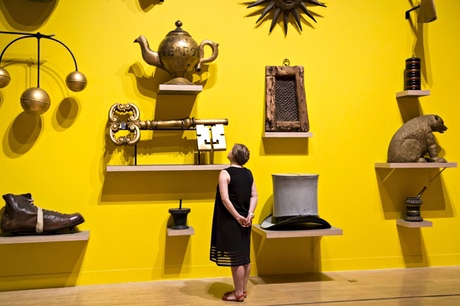
So despite being excited about the British Folk Art exhibition I was slightly wary going in. But I needn't have worried - none of my fears were realised. A subject as vast and varied as 'folk art' could have filled endless rooms and corridors, but Tate had about four rooms with themed selections that not only made it manageable, but interesting too. Of course there were some proper art buffs milling around, but their mutterings weren't audible over the hums of conversation between all the other diverse groups of people in there. What particularly stood out for me in this respect was seeing children genuinely engaged with the pieces. Your experiences may differ from mine, but for the most part when I've passed children in galleries or museums I've usually caught a 'this is so boring' or 'can we go home now?', not 'look, this is so cool!' which I heard a young boy say to his mum about the giant keys and boots used as shop signs.

Wall of trade signs (from The Guardian)
The exhibition was hailed as a celebration of objects made outside the British mainstream over the last few hundred years, and was the first of its kind. 'At its foundation in 1768-9, the Royal Academy declared that "no needlework, artificial flowers, cut paper, shell work, or any such baubles should be admitted" to its prestigious exhibitions...' and examples of all of these, and much more, were featured.

Like I said, I don't know much about art; this is merely a few paragraphs about the things I found most interesting or beautiful, and I hope that many more of you have the chance to see the exhibition as it leaves the Tate and travels onward.

Two variations of 'The Earthstopper' by George Smart
George Smart (c.1775 - 1846) was a tailor in Tunbridge Wells who made collages out of textile and paper scraps. Smart reproduced his pictures to sell, resulting in many variations of his work. The exhibition featured different versions of 'Goosewoman', 'Old Bright the Postman', and 'The Earthstopper'.

Two walls were dedicated to the sea, the sky and land - common themes in folk art. They featured lots of wool-on-canvas work such as embroidered maps of the country, counties and solar system - even the layouts of farms. There were also several ships and seascapes usually made by retired sailers and fishermen, like John Craske (1811-1943), 'a Norfolk fisherman who took up painting and embroidery when he was forced to retire due to ill health'. On display was his woolwork 'Rescue', an embroidered image of a boat being rescued off the coast. The Royal Academy's rejection of 'feminine arts' included needlework, so it hadn't even crossed my mind that there would be male artists working with silks. And I wonder how many do now.

Within this area, one piece in particular stood out for me: the 1811 wool and silk solar system, created by a girl as part of her education. It included a quote from Milton's 'Paradise Lost' at the top, and depicted the orbit of a comet and the known planets of the solar system, including their distance from the Sun. At the time, Uranus was called 'Georgium Sidus' after the King. I wonder if I would have enjoyed certain subjects more when I was at school if I'd had the opportunity to learn them creatively - felted trigonometry, perhaps?


This Sweetheart Pincushion, made in 1896, would have been sent home by a soldier/sailer to a loved one, probably during the Crimean War. If you'd told me before that a pin cushion would blow my mind I would have laughed at you. But, wow, pins are fascinating! Back then pins were handmade and very expensive; so expensive in fact that they were only sold two days a year, as people would need the rest of the year to save up to buy them! And the folklore of pins was spectacular too: sticking a pin into a textile was said to bring luck to the person it was for; on ships, sailers associated pins with witches and called them 'little witches in disguise', yet they would still bring them on board as good luck charms to neutralise a witch.


The Harvest Jug, made in 1838 in North Devon from Red Earthenware with a yellow slip, has 'sgraffito' (scratched) decorations referring back to earlier traditions (and I'm pretty sure that's where we get the word 'graffiti' from). It depicts the Sun, a cockerel, flowers and leaves, and the text on the side is a poem exalting harvest labourers. The jug was made for harvest celebrations, and would have been a treasured possession within the family. I can't say exactly why I was so drawn to this. Perhaps it was the colours, maybe the mishmash of text and art, or just the fact that it is beautiful and practical - art with a function within the family.

One particularly mysterious piece was the God-in-a-bottle or 'whimsy', 'patience' or 'puzzle' bottle. From the late nineteenth century, they were associated with the Roman Catholic diaspora, especially labourers in northern England. Their purpose remains a complete mystery.

Gods in bottles (from New Statesman)
The oldest object on display was a wooden nutcracker c.1595-1605. It was carved like a person, and the nut would have been cracked in his mouth. On the theme of food, there was also a wooden gingerbread mould in the form of an alphabet square c.1600-1750.

There was a room full of carved figures for ships or trade signs. They were great...but I wouldn't have liked to have been alone in there. There was something creepy about them, especially the more garish ones. For me they fall into the same creepy category as clowns and china dolls, you know? Anyway, the garish ones had been more recently restored, and I discovered that a feature of much folk art is the repainting or remaking by many hands over time (does this count with folklore as well, and the way we rewrite and rework traditional stories?)

Mary Linwood's 'needlepainted' self portrait after John Russell (from The Foundery)
Mary Linwood (1755-1845) created an amazing needlework self portrait based on a pastel portrait done of her as a young woman. Linwood's art is called 'needlepainting' because it is so intricate, and her fame is based on embroidered copies of Old Masters such as Rembrandt. She was excluded from the Royal Academy as they would not accept needlework or other 'feminine arts', but as well as that, 'she remains largely unclassifiable, lacking the originality demanded of the fine artist, and the 'authenticity' required of the folk artist, yet also disconnected from domestic craft traditions.'

All these questions surrounding classification, intention and authenticity must have made it a real headache trying to put this exhibition together!


The final picture I took was of the felted wool Crimean Quilt (c.1853-6), which was '...created by soldiers injured in the Crimean War. It comprises over 10,000 separate pieces; the creation of such labour-intensive textiles was promoted among serviceman as a form of therapy.' Creating something like this would have helped to keep servicemen away from drink, gambling and women, and would have been a great help dealing with the effects of Post Traumatic Stress Disorder. It includes parts of soldier's uniforms; there is one myth that says it contains the uniforms of lost comrades as a memorial to them.

The final room examined folk art as an expression of community and collective identity, and the idea of the folk artist as a 'wholly idiosyncratic maker' e.g. Jack Punter and 'The House that Jack Built'. We were reminded that folk art and folk traditions are not part of some long-forgotten past, but are still alive today in the form of pearly kings and queens, mummers, master thatchers and straw effigies, well dressings and so on...

Exhibition room (from June Sees. Check out their review and more pics here)
If you can catch the exhibition at its next stop, please do! And here is a review from The Guardian.

Tuesday, 21 January 2014

Le Cirque des Reves


The Night Circus
Erin Morgenstern

by viveie @ dA
A dreamer is one who can only find his way by moonlight, and his punishment is that he sees the dawn before the rest of the world.
--- Oscar Wide, 1888 (7)

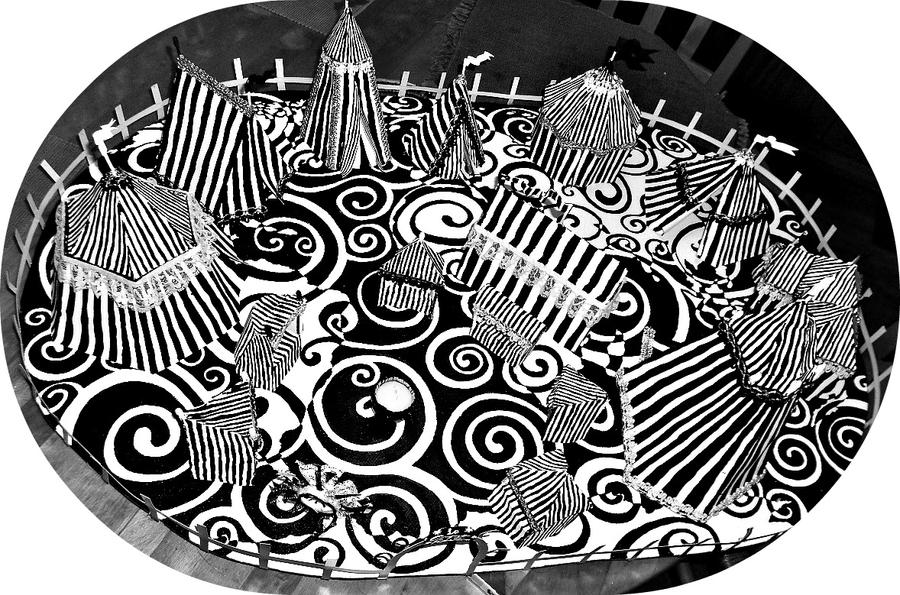
'The circus arrives without warning...' It is a surprise in every way imaginable. Le Cirque des Reves is everything we ever wanted a circus to be...perhaps it is how we saw the circus as a child. Watching the same shows is markedly different as an adult; the veil has been lifted from our eyes, the glamour has worn off. Unless, of course, we are following the swirling black and white paths of this particular circus, losing ourselves in the pathways and tents...


by beyondimpression @ dA
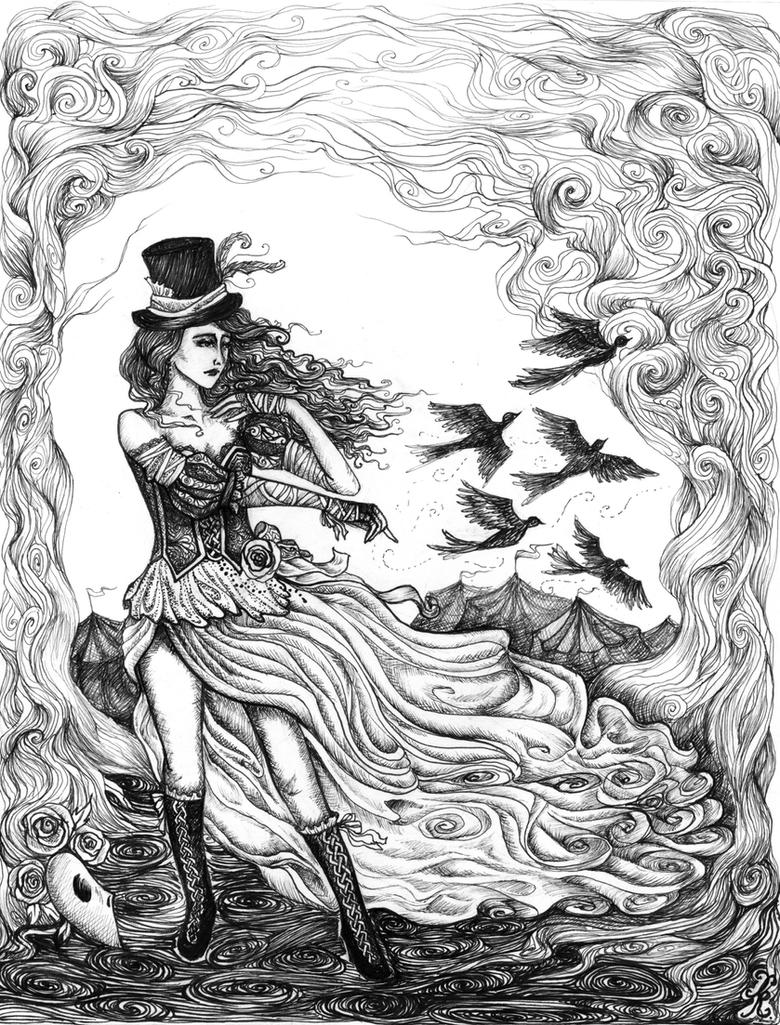
There is so much that glows in the circus, from flames to lanterns to stars. I have heard the expression "trick of the light" applied to sights within Le Cirque des Reves so frequently that I sometimes suspect the entirety of the circus is itself a complex illusion of illumination.
--- Friedrick Thiessen, 1894 (115)

by La-Chapeliere-Folle @ dA

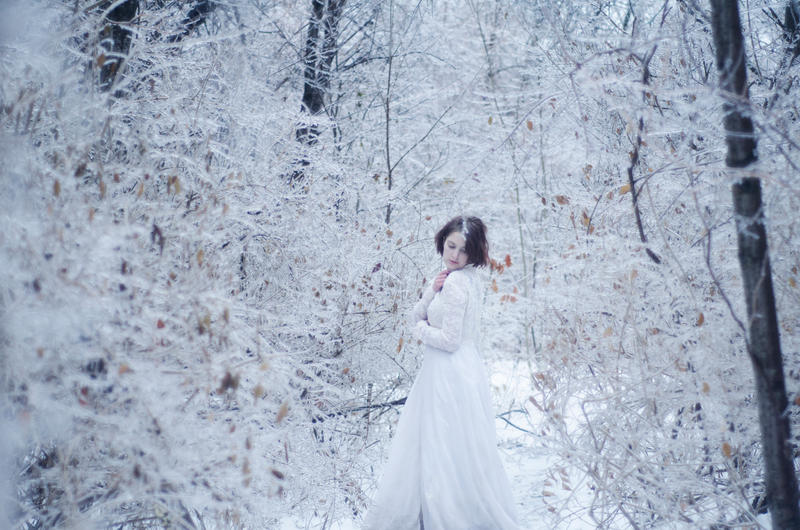
There are tents containing such variety of curios and wonders that no one will be able to resist the temptation of pulling back a curtain and stepping inside. Perhaps it will be the ice garden, or maybe the mist-filled tent containing live paper animals. Will it be the cloud maze, or a tent of jars and bottles containing the scents of your fondest memories? You might visit the acrobats, the illusionist, or the fortune teller, and in between you might stand in the central courtyard and watch the cauldron of twisted wrought iron burn with a bright white flame. Don't forget to light a candle and hang it on the wishing tree. Your wish might just come true (if it hasn't already).


by Laizeck @ dA
I find I think of myself not as a writer so much as someone who provides a gateway, a tangential route for readers to reach the circus. To visit the circus again, if only in their minds, when they are unable to attend it physically. I relay it through printed words on crumpled newsprint, words that they can read again and again, returning to the circus whenever they wish, regardless of time of day or physical location. Transporting them at will.When put that way, it sounds rather like magic, doesn't it?
--- Friedrick Thiessen, 1898 (467)
by LexiARRIVING @ dA

What do you mean, 'what is the book about?'? Why does it matter? There is no good reason for me to relay the reasons this is a Romeo and Juliet story, or mention anticlimaxes or rapidly changing points of view. I am not helping if I talk in depth about the characters, the Victoriana, the magic and casual allusions to fairy tales. It is all, in the end, irrelevant. The book is not the point: it is all about the circus.


by BloodType0 @ dA

You have a particular book, I imagine; one where you like to escape to when you close your eyes after a tiring day, after it's all become too much. A world enclosed in pages that envelops you in a papery embrace and comforts you that there is still wonder in the world, beyond bills and bosses and screaming children. This is not one of those books. The Night Circus does one better. Le Cirque des Reves provides us with snippets of fantastical, mythological, magical worlds without rules and without reason (which our adult minds do so like to cling on to), tented worlds of ice, of memories, of fountains and stars and wishes. Little bubbles of wonder that allow our minds to see the circus like children again. It is what we need.

Our revels now are ended. These our actors,
As I foretold you, were all spirits, and
Are melted into air, into thin air:
And, like the baseless fabric of this vision,
The cloud-capp'd tow'rs, the gorgeous palaces,
The solemn temples, the great globe itself,
Yea, all which it inherit, shall dissolve,
And, like this insubstantial pageant faded,
Leave not a rack behind. We are such stuff
As dreams are made on; and our little life
Is rounded with a sleep.

--- Prospero, The Tempest, Act IV, Scene I (467)


*Numbers in brackets refer to page numbers in the Vintage 2012 edition of the book.

Monday, 13 January 2014

The Natural History of Unicorns

This year I have begun by ending, by finishing books I have been reading on and off over the last year. 4/5, just one more to complete! My most recent conquest definitely deserves a mention here: The Natural History of Unicorns, by Chris Lavers.

Any of you with a mythological bent will probably have seen this book pop up on your radar, and if you haven't yet checked it out I urge you to do so. Lavers takes you on a fascinating journey through thousands of years of history, mythology, misrepresentations and poor translations to demonstrate how the unicorn does and does not exist. 

He is objective with the information and at times writes with the flare of a novelist, by drawing the reader in with detailed accounts of expeditions or by adding twists and turns and bursts of new information that change the perspective of the last ten pages. As a reader this can at times make it tiring to read; the sudden changes of pace and density of information require a fair amount of effort to keep up with, and although this is the main reason it has taken me so long to finish the book, I promise you it is worth the effort. 

Lavers concludes the book by stating that it is unlikely we will ever find the original source of the unicorn myth, and I think that if we're searching for a written text, then he's probably right. He's already shown that the unicorn can end up in the Bible because translators didn't recognise a word, but made the logical assumption that a unicorn was meant based on the stories they had heard - this, to me, is a clear demonstration of the power of oral traditions and the lasting affect they can have on history, whether we're discussing the Bible or fairy stories. 

(And, on the subject of fairy tales, Lavers introduces some incredible sources of fairy tales and folklore form ancient civilisations that I personally cannot wait to look into further!)

I think the unicorn is the perfect subject for a story that begins with the age old and beloved phrase: Once there was and there was not...

Monday, 1 July 2013

2 Recommendations...

I am trying to get back into writing, but finding the time has been really difficult recently. I did start using an organiser though...maybe that will help?! I really hope so!

I have been forcing myself to keep reading though, because when all else fails it is reading something hauntingly beautiful, evocative and magical that will most likely get my own creative juices flowing again. I have two books I need to share with you today, because it would be wrong to keep them to myself!

The Folk Keeper 
by Franny Billingsley

Wow. How has this book not come up on my radar before? It's never been on a 'recommended' list, I've never seen it mentioned by other fairytale/folklore enthusiasts and when I have actively searched for new books to read it has never appeared...this needs to change! I can't believe I only discovered it by chance, casually browsing someone's wish list on Read It Swap It! Sorry, sorry, I'll stop ranting now...

Here's a blurb:
...Corinna Stonewall is a 15-year-old orphan who possesses a dangerous gift. She is a Folk Keeper, responsible for absorbing the attack of the savage Folk who dwell in the cellars of the Foundling Home where she lives, disguised as a boy. Through observing the correct rituals and by making careful sacrifices of choice food, she can prevent the Folk from spoiling the milk and ruining the crops. However, there are many mysteries that Corinna does not understand about herself. Where are her parents? Why does her hair grow two inches every night? Why does she long for the taste of raw fish?...Billingley's eloquent style is a joy for adults and evokes such an atmosphere of fear and longing that readers of all ages will keep turning the pages eagerly. Ages 10+ (Kirkus UK)
This book impressed me on a number of levels, one of which was simply because it involves Selkies. I haven't come across too many of them (most stories about mythical sea creatures tend to feature mermaids), and loved how they, and the other Folk, were only referred to in the vaguest sense, letting the imagination fill in the gaps and also allowing for the fact that we all know, really, on some level what Selkies and Folk are, and don't need it spelling out.

The language was intoxicating, with a rhythm and subtlety that is hard to find in books (primarily) aimed at children, but which I feel makes them all the more special - the sort of book you remember with a deeper fondness as an adult. 

I think the length is also worth mentioning: it's short. And this is very good. I think it is the perfect length for a story that is expanding on traditional folk tales, because it is able to retain 'that feeling', the one that keeps you captivated and enchanted. The longer a book gets the more complex it becomes, there are more characters, more devices, just more, and whilst I'm not in any way slating longer books that retell or recapture fairytales (seriously, I love them) I do feel that they lose something of the magic you feel from a short tale.

Highly recommended!


Wildwood 
by Colin Meloy

To begin, the blurb:
Prue McKeel is keeping out of trouble. Or trying to. Then her baby brother is abducted by crows and hauled off to the woods beyond the city. It is up to Prue to bring him back. On her mission she is plunged into the world of Wildwood and there she meets more trouble - and magic - than she ever thought possible.
This book is a gem. It's a book that did come up on my radar, and is popular enough to be in my local library, so I wouldn't be surprised if more people recognise it!

After all my posts about the forest and re-inspiring the next generation to fall in love with them, this book answers the call. I don't know whether the author suggested this intentionally or not, but the fact that the inhabitants of the town have never dared venture into the woods and are scared to go in could easily be a reflection on how out of touch we are in general with the natural world.

But when we do venture into the woods, wow, so much magic and joy; Wildwood felt like a modern version of The Lion, The Witch and The Wardrobe with amazing and diverse characters and such a cleverly woven plot. Again, this is another book with rich language and beautiful imagery that sadly seems rare in children's books nowadays - this book will not allow you to read it quickly, you have to go at a certain pace to savour the language it is so rich (I'm really not exaggerating, I tried to speed up so I didn't have to renew it with the library and felt like I was being mentally tripped up as punishment!)

I also want to quickly mention the artwork: it definitely brings to life the 'folk' element of the novel, and should be savoured as much as the words. Having pictures in children's books is not the done thing above a certain age range, but this isn't 'patronising' in the least, nor does it take away from the beauty of the words - they complement each other perfectly.

Happy reading!

Tuesday, 12 March 2013

Review: 'Mermaid' by Carolyn Turgeon

I love walking into my library and having a fairy tale retelling leap out of the stacks at me, rather than having to take a list and hunt around on the off chance that one might be stocked - this is exactly what happened to me with Mermaid. I wasn't looking for anything in particular, and there it was.

Sourced from the Author's website.
I should probably start by saying that I enjoyed reading this book. Too often the English student in me takes over my reviews with so much criticism that I read back over what I've written and wonder how I ever made it through the book in the first place! But I'm glad I've been trained to read with a critical eye. Yes, I have criticisms about this book, but that won't stop me recommending it purely on the basis that it is an enjoyable read.

Firstly, the blurb:
Two sheltered princesses, one wounded warrior; who will live happily ever after? 
Princess Margrethe has been hidden away while her kingdom is at war. One gloomy, windswept morning as she stands in a convent garden overlooking the icy sea, she witnesses a miracle: a glittering mermaid emerging from the waves, a nearly drowned man in her arms. By the time Margrethe reaches the shore, the mermaid has disappeared into the sea. As Margrethe nurses the handsome stranger back to health, she learns that not only is he a prince, he is also the son of her father’s greatest rival. Sure that the mermaid brought this man to her for a reason, Margrethe devises a plan to bring peace to her kingdom. 
Meanwhile, the mermaid princess Lenia longs to return to the human man she carried to safety. She is willing to trade her home, her voice, and even her health for legs and the chance to win his heart….

I have to admit the story is pretty predictable, and despite one slight twist on the original story (partly fuelled by the new character, Margrethe, and partly down to Lenia's actions) Andersen's classic is relatively untampered with. When I finished the book I felt cheated out of the promise that this would be a modern retelling. However, reading back over the reviews I noticed that, cleverly, the word 'modern' wasn't in fact used once, although 're-invention' and 'surprising take' were thrown around.

But then, if the original is so closely adhered to, how 'modern' can you make a story that values women differently? People talk about The Little Mermaid with affection for depicting a woman taking control of her life and pursuing her dreams...but ultimately this dream does not challenge the prevailing discourses that keep women in their proper place, as the Mermaid's desire is to become a wife. In Turgeon's retelling, the role of mother and wife is an unchallenged one; at first Margrethe seems 'modern' in that she has pursued education and takes an interest in politics (the era the book is set in marks this as unusual) but the second her position is threatened by another woman, her political motivations are forgotten amidst a delirium of jealousy, self loathing and body complexes.

Mermaid may not appeal to the feminist in me, but it does the aestheticist; there was a beauty in the imagery and at times a poetic lilt to the language, undoubtedly enhanced by the romantic settings (e.g. a convent on a stormy coastline at the edge of the world), that I would love to see more of in modern fiction.

Tuesday, 19 February 2013

Nix Nought Nothing: A Male Sleeping Beauty?

Having just finished reading Joseph Jacobs' English Fairy Tales I was particularly struck by one story: 'Nix Nought Nothing'. If you haven't read it, then you really must! It has everything a fairy tale needs!

The beginning resembles 'Beauty and the Beast', with a father unwittingly giving up his child to a giant:
At length the king was on his way back; but he had a big river to cross, and there was a whirlpool, and he could not get over the water. But a giant came up to him, and said "I'll carry you over." But the king said: "What's your pay?" "O give me Nix, Nought, Nothing, and I will carry you over the water on my back." The king had never heard that his son was called Nix Nought Nothing, and so he said: "O, I'll give you that and my thanks into the bargain."
Nix Nought Nothing lives with the giant for many years, and has adventures that will probably be familiar to most fairy tale enthusiasts: he is given three impossible tasks to complete and is helped by his captor's daughter, who he then runs away with. As they are pursued they throw ordinary objects behind them that turn into treacherous terrain for their father-captor-pursuer to cross. 

by Arthur Rackham. Source: SurLaLune
But it is the end of the story that surprised me, because beyond Sleeping Beauty/Snow White stories and their obvious variants, I have never before come across a scenario where a male hero must be rescued from an enchanted sleep.

So when [Nix Nought Nothing] asked his way to the castle [the hen wife] put a spell upon him, and when he got to the castle, no sooner was he let in than he fell down dead asleep upon a bench in the hall. The king and queen tried all they could do to wake him up, but all in vain. So the king promised that if any lady could wake him up she should marry him

In the end, he is woken by a gardener's daughter who the wicked hen-wfie taught the words to break the spell. But when the giant's daughter finds out what has happened she goes into the castle, tells the story of their adventures together and love for one another, and Nix Nought Nothing is able to remember her and confirm the story. The king and queen are sensible enough not to make good on a promise that would result in unhappiness (which in itself is a surprising turn on a familiar plot device) and allow their son and the giant's daughter to marry and 'live happy all their days'.

'Nix Nought Nothing' is such a varied story with so many interesting characters and twists on usual plot conventions, that it has instantly become one of my favourite fairy tales. But I would love to find out more about male characters being put into an enchanted sleep, if anybody can inform me, because this has really intrigued me!

*all quotes from SurLaLune

Friday, 11 January 2013

Exploring the Forest

For Christmas this year I received a truly inspirational present: Gossip from the Forest by Sara Maitland. Although I was lucky enough to be given several books, this is the one I couldn't resist delving into first, and I was instantly hooked. I am now halfway through and loving every page!

Source: Waterstones
Each chapter is devoted to a specific forest Maitland is exploring, and her writing seems to effortlessly mimic a chain of thought that links types of trees, the forestry-oriented history of the country, and of course the relationship with fairy tales. The chapters on the woods are interspersed with interesting re-tellings of fairy tales that draw their magic from this landscape: one that stands out for me is her version of Hansel and Gretel, which deviates completely from the familiar tale and instead examines their lives as adults, coping with what went on in the darkest depths of the trees...

The most wonderful discovery so far is a chapter entirely devoted to the very part of London I grew up in - turns out my neighbourhood, West Norwood, gets its name from a contraction of 'North Wood', which covered a vast expanse of what is now south London. Reading about the history of a place I know so intimately has caused a stir inside me: I literally grew up on the long lost roots of ancient woodland! Whenever I go into green spaces, especially woods, I feel so alive and free in a way that is hard to express, but which I want to channel in order to create some interesting writing for THCV...

So, inspired by Maitland and my own woodland adventures, I have decided to dedicate a series of posts to exploring the forest and our links to them in fairy tales and books in general. I want to pick up on some ideas Maitland posits, look at specific books that capture the magic of the forests, and hopefully go on my own version of a forest adventure...


Monday, 10 December 2012

There's something wrong with Gwen...

Angel Coulby as Guinevere in BBC's 'Merlin'
Readers, as you'll have noticed by now, I love my legends of King Arthur. I moaned about 'Camelot' as I re-discovered and enjoyed 'Merlin', and I couldn't believe it when I found out Caerleon was IS Camelot. Apologies to the readers who follow for fairy tale or writing related ramblings, but this is a 'Merlin'-related rant (that may contain spoilers, so be warned!) about feminism and the depiction of women on TV.

So...anyone noticed that something is wrong with Gwen? I don't mean the way she was brainwashed by Morgana, I mean before that. And after that. The girl who was so active, so passionate, and so kind to everyone in the previous series has become passive and distant now that she has married. I used to think it was very cool to show a woman who deserved to become queen, who lived her life like a queen even though she was a servant. But now...Gwen has become Arthur's accessory.

She sits meekly at Arthur's side and does nothing. She doesn't talk kindly (at all, really) to Merlin, even though they were friends. And she has lost her passion and compassion (I'm thinking about how she obediently 'performed her duty' of sentencing a young girl to be executed. She tried to alleviate her conscience by taking a chance on the fact that the girl's father would show up and try to rescue her, which is a far cry from actually standing up for what she believed in, which is that the girl was innocent.)

Katie McGrath as Morgana
Strangely enough, when Morgana brainwashed her in that dark tower, Gwen became more like the person she used to be. She began to sneak around, actively trying to accomplish what she believed in. She acknowledged her roots, the fact that she came from a 'normal' background. She took the time to relate to Morgana and feel her pain, wanting to bring her justice, unlike the girl she sentenced to be executed, whose pain she wanted to ignore and whose fate she wanted to leave to chance.

Of course, Merlin and Arthur saved the day and 'cured' Gwen. She went back to being the docile, passive woman they had grown accustomed to. Unsurprisingly, that was the end of Gwen as a prominent part of the storyline. And did anything come of it? Well...she did say 'thank you' to Merlin, I suppose.

I feel this brings up the familiar discussions about women giving up their lives when they become married, and of the women in stories who are dangerous purely because they have agency. But what really makes me cross this time is that the BBC has shamelessly and clearly shown Gwen change from strong to weak, active to passive, admirable to deplorable. This is a children's show, it has a 19:30 time slot, and the ONLY female character who represents the force for good is sitting around looking pretty. So much for the role model.


Friday, 2 November 2012

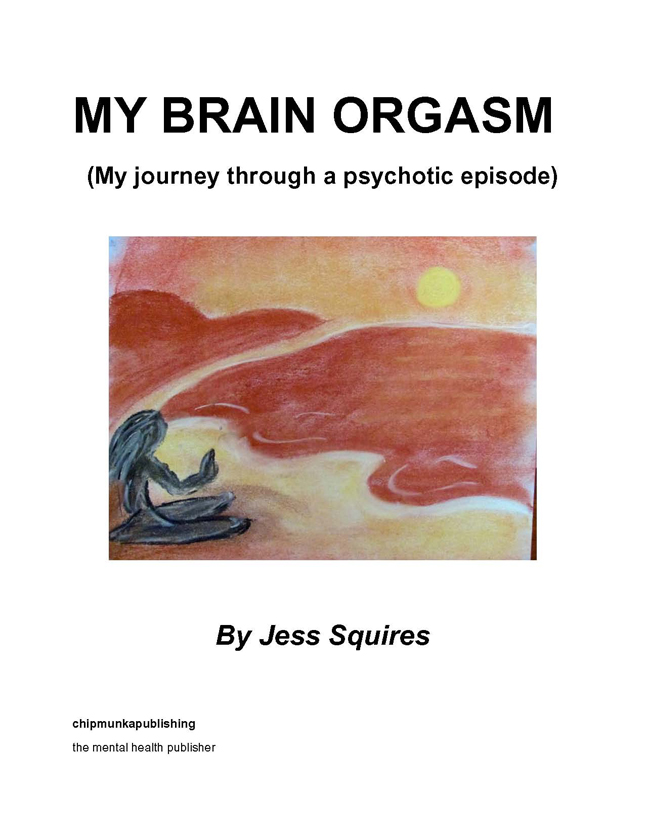
Feature: My Brain Orgasm

Today I'd like to feature Jess Squires, a very good friend of mine, whose short book, My Brain Orgasm, has just been released in paperback after a successful stint as an e-book from Amazon.

This is my Amazon comment on the book:
This book is an honest and thought provoking read. I've never come across anything like 'real time psychosis' before, but it was gripping - it's not very long but it flows so naturally that I couldn't put it down.Unusually for a book it contains short hand elements (e.g. 'u' for 'you') and this adds to the real-time feeling and gives a sense that the author had so much to say, it just had to come out as quickly as possible.
What I did not expect was for it to be so beautiful. There is a feeling of euphoria and just pure happiness when the author arrives at her own conclusions and understandings about god and religion.
I think there's generally a lack of public awareness about mental health issues, its a bit of a hush-hush issue (in this country at least) and although there are people and organisations working to change perceptions, there is still a lot of stigma attached. That being said, it is works like this from brave people who are willing to share such a personal experience that will help.
She received her copy of the paperback today and it was so exhilarating to hold it and flick through - I felt so honoured to share that feeling of excitement with her.

If you're at all interested in mental health and want to read something truly unique, then please have a look at this book! For more books about mental health, Jess' publisher deals specifically with books about mental health, and by people who live with mental illness.