Thursday, 3 November 2016

How did Arthur pull the sword from the stone?

The books I am picking up these days are not entirely different to the ones I would reach for before, but they certainly have more of an environmental or eco-spiritual bent to them; which is why I was so surprised to be confronted with a new theory about King Arthur in a book about hunter-gatherers!

Ffyona Campbell’s small but beautiful book, The Hunter-Gather Way is part memoir, part anthropological investigation, part thought-experiment and part field guide. It is a quick read but an absolute treasure, with more to take away than in many books ten times its size.

Campbell reached the subject of King Arthur after first considering the purpose of Stonehenge, which led her on to Druids. Although discovering the Druids wouldn’t have had anything to do with the construction of Stonehenge, she did find out that they first learned how to extract iron out of iron-ore at the headwaters of the Danube, the land of the Celts. She tried to imagine demonstrations of the process to a new observer, and how much it would look like a fiery magic that resulted in drawing blood out of a stone!

And then…
“This led me to thinking about King Arthur.
King Arthur lived much later, just after the fall of Rome, when England was about to be invaded by all and sundry and so it needed defending. The call went out for: ‘whoever can pull the sword out of the stone will be the next King of England.’ I realised they didn’t mean, ‘whoever can pull this sword that’s sticking up out of this stone,’ they meant, ‘whoever can get iron out of iron-ore to make swords and so defend England will be the next King.’
And why would Arthur have been able to do this as opposed to anyone else? Because Arthur’s teacher was Merlin, and Merlin was an old Druid.
It makes sense too that Excalibur was found in the lake because the Celts, all those years before, had thrown beautiful iron items into the lakes and rivers to give thanks for where they had worked out the technology at the head waters of the Danube.”
Possible? I’m not sure. But a wonderful idea nevertheless on a subject I will never grow bored of!

You can visit Ffyona Campbell’s website here.


Related King Arthur posts:

Monday, 19 September 2016

Into the Forest

It has begun. I have stepped off the beaten track and away from everything familiar. I heard my name called in the sound of the wind rushing through leaves, shaking branches, whispering to me spirit to spirit. It has been coming for a while, and despite the months of anticipation and preparation, the first step was still a hesitant one.


Into the Forest | A.L. Loveday
'A road. For so long in my mind it had been an unquestioned symbol of travel, adventure and escape, but in reality it’s a lousy metaphor. A road is a tunnel that traps you in linear places, linear concepts and linear time. It provides ease and convenience, but cheats you of everything you might learn if you only had the time and curiosity to leave it.'
- From The Idle Traveller, by Dan Kieran -

I needed to leave, I knew, in order to find something I have long been searching for. I'd been unfurling tentative feelers for the past six years, both outward and inward, and the time had come to try and answer some questions and explore ideas that had captured my imagination.

Into the Forest | A.L. Loveday
'T.H. White's Arthur is sent to the forest to seek his identity; many children find woodlands the right place to go to talk to themselves, to dream themselves into a different being, to effect their changeling masquerades away from the eyes of adults. For under the gaze of others, a child can be forced to hold one form, to keep a single identity, but in woodshade and tree-shadow, a child's spirit can stretch, alter and change; it is always easier to change yourself in the dark.'

I am here to learn, to explore, and also to heal. I am here to work and to play. I am here to be alone with myself and engage in community. 


Into the Forest | A.L. Loveday
‘To know the woods and to love the woods is to embrace it all, the light and the dark -- the sun dappled glens and the rank, damp hollows; beech trees and bluebells and also the deadly fungi and poison oak. The dark of the woods represents the moon side of life: traumas and trials, failures and secrets, illness and other calamities. The things that change us, temper us, shape us; that if we're not careful defeat or destroy us...but if we pass through that dark place bravely, stubbornly, wisely, turn us all into heroes. ‘

And yet, despite all the fairy tale warnings, sometimes we're compelled to run to the dark of the woods, away from all that is safe and familiar -- driven by desperation, perhaps, or the lure of danger, or the need for change. Young heroes stray from the safe, well-trodden path through foolishness or despair...but perhaps also by canny premeditation, knowing that venturing into the great unknown is how lives are tranformed… 

Sara Maitland compares the transformational magic in fairy tales to the everyday magic that turns caterpillars into butterflies. "[S]omething very dreadful and frightening happens inside the chrysalis," she points out. "We use the word 'cocoon' now to mean a place of safety and escape, but in fact the caterpillar, having constructed its own grave, does not develop smoothly, growing wings onto its first body, but disintegrates entirely, breaking down into organic slime which then regenerates in a completely new form. It goes as a child into the dark place and is lost; it emerges as the princess, or proven hero. The forest is full of such magic, in reality and in the stories."'


If I have learnt anything from fairy tales, it is that you get nowhere in life without straying off the path, at least for a little while. The woods are there for you to lose yourself in, but, and this is the important thing, they are where we find ourselves again. We need the woods to become more than what we were.

Into the Forest | A.L. Loveday
‘We need the woods—the metaphor and symbol of the woods, the mythology of the woods. But all stories begin in a real place—as breath and movement in a physical space—and soak up the colour and texture of that place. When the woods are gone, the metaphors lose their power, the stories cease speaking from the silence of the trees.’
- Via Unsettling Wonder -  
We need our woods, but once again, they are under threat. The Forest of Dean, my home for the next few months, had not escaped the attention of gas-hungry predators; luckily, in the last couple of days, it has emerged that the companies in question have decided not to explore for gas. This is a huge relief. Our green spaces are sacred resources simply for being green, and the benefits they bring to us as they are should never be undervalued. 

I don't quite know what changes will occur, or what magic will happen here amongst the trees. But there's only one way to find out...


Sunday, 11 September 2016

Terri Windling's Tolkien Lecture

After my last post I thought it would be a good time to share Terri Windling's incredible talk for the fourth annual Tolkien lecture - although I'm sure many of you will have seen it already! 

She delivered her lecture at Pembroke college earlier this year and used the platform to discuss the state of fantasy literature today, focussing in particular on the lack of connection modern works, and modern people, forge with the land. Her words deeply resonated with me; the books I sought out as a child, the ones I seek out now and much of the writing I produce “behind the scenes”, if not in public, seeks this essence of connection to place. I could try to explain further, but I’m sure you would much prefer to hear Terri’s incredible lecture yourselves:


Please don't forget to treat yourselves with a visit to Terri's blog, Myth & Moor!

Friday, 9 September 2016

The Surge in Nature Writing: Reconnecting Body and Soul

In her exploration of the 2016 Wainwright Prize for nature writing for The Guardian, Alison Flood noted that more and more people are turning to this genre as 'a balm for the woes of modern life'. The article explains how the genre has evolved and subdivided and reached a popular new sub-genre, in which nature writing is used as a tool for reflection and deep personal healing. Despite a shortlist containing nature writing in a variety of styles, the judges unanimously voted for The Outrun to win, in which author Amy Liptrot returns to her home in Orkney in order to recover after a traumatising time living in London.

Dame Fiona Reynolds - chair of judges - said of the books: “[They show us that] there’s more to life than the economy, or foreign policy – these writers are articulating beautifully the ways in which the human spirit needs to connect with the world around us, and to respect the world around us.”

The Surge in Nature Writing | A.L. Loveday | 2016


Are we collectively beginning to remember something buried deep within us? Times are changing, souls are stirring, beliefs are shifting; and these books, this award, is the most mainstream recognition of this that I have come across.

As humans, we were never meant to be at war with Nature, as if She were an enemy to conquer. And yet this is exactly what we have done; we have denied that we are a part of Her, out of fear for Her power, unpredictability and for Her destructive potential. How ironic that in the process of trying to suppress and tame these qualities in our outer world we have exaggerated them within ourselves. How ironic that in trying to create outward order we have thrown our souls into chaos. For centuries we have systematically severed an integral part of ourselves, and gradually we are opening our eyes to the need to draw it back together.

The Surge in Nature Writing | A.L. Loveday | 2016


The journey contained in the pages of these types of books is a holistic one, where the mind, spirit and body are healed by reuniting them again. I am well aware that at this point there is a temptation to roll your eyes and think of those Instagram posts of slim white women on a yoga calendar and juice detox - and I believe that there is a place for that type of healing journey, it is totally valid, but also that this branding (yes, we are self-branding our lives here on social media!) of the journey does not resonate with a vast majority of us, our bodies, our experiences, and we need to see it mirrored in different ways in order for it to strike that all important chord.

And yet most of us will have felt that deep sense of peace after a day in the garden or allotment, digging or planting, hands at work in the earth. Or that inner smile when we've treated our bodies right, by feeding it nutritious food or simply by allowing it to relax and not pushing it too hard. Whether in a book jacket, an Instagram post, or a bowl of porridge instead of bacon for breakfast, we are exploring this reconnection. The trick now, as we hear the call and the pull from a variety of places both in the outer world and from little nagging inner parts, is to listen and act.

The Surge in Nature Writing | A.L. Loveday | 2016


I'm a Reiki healer, and I could talk your ear off about energy layers and the interconnectedness of everything. I'm a reader and writer and I could bang on and on about these books and why you should read them. But above and beyond everything I say or believe I am, I am a human being, and you are too, and so I know that I don't need to say anything else. Because I know that if you choose to take some time to go into the wild, into Nature - and I mean really do it, not just look at it through a car window - and you get your clothes a bit muddy or your skin a bit scratched and your hair knotted in the wind and you inhale deeply...you won't need to read any books or any blog posts to understand exactly what they are saying and understand the inherent truth beyond the words.

Saturday, 27 August 2016

The Mists of Avalon


I’m late to the party for this book. In some ways it’s unsurprising - it was published before I was born... - but considering how much I love to absorb anything with even the merest hint of Arthurian legend about it, I can’t believe I didn’t pick it up sooner.

But everything in its time, and in its place. I had to read the series chronologically after accidentally starting with The Forests of Avalon two years ago. This is where my OCD twinges come into play: once I knew what I had started, there was no way I could read the final book before the second! Ultimately, however, I think this served me well.

The Forests of Avalon depicts life in Pagan Britain at the start of Roman rule, and we see how the line of Once and Future Kings came to be, through the union of a Roman soldier and a High Priestess. Lady of Avalon follows the descendants of this union, the royal line of Avalon, hurtling through time as Roman rule takes hold and the threat of the Saxons grows. Crucially, in preparation for Mists, we see the divisions growing between Paganism and Druidry, and the emerging powers of Christianity. I will never know if I would have enjoyed The Mists of Avalon quite so much without both these books as the foundations for it.

When I do a quick search of the title I can see straight away that people have had a lot to say, and it has obviously had a lasting impact in the 30-odd years since it was first published. I believe the reason for its enduring popularity is due to its modern views on religion, sexuality and gender roles, even within a medieval setting. 

'Morgaine le fey', by Liliane

This is what a feminist looks like


It could be argued that one of the main issues addressed in the novel is of a woman’s status within the court (workplace), including what work it is possible and expected of her to do, and the advancement she is able to achieve - contemporary issues of “glass ceiling” feminist thought prevalent in the 1980s, when this book was published. 

Sadly, this is still an ongoing battle today. The Fawcett Society states that the overall gender pay gap for full time workers is 13.9% due mostly to discrimination, unequal caring responsibilities, a divided labour market, and men holding a majority of the highest paid and most senior roles. The plight of the women in the novel is still one that women today can easily relate to.

Multiple Morgans: a variety of actresses who've portrayed Morgaine/Morgana/Morgan Le Fay. Source.
There is a thorny tangling amongst the apparent dichotomy of Avalon/Camelot, Paganism/Christianity, Matriarchy/Patriarchy; such complicated relationships would have been misrepresented if their treatment in the book had been anything but murky, ping-ponging back and forth. It was at times tempting to idealise Viviane’s matriarchal society in Avalon, especially as we saw the devastating and violent effects patriarchal Christianity had on Gwenhwyfar; but it was in no way romanticised or glorified as perfect. If anything, Viviane would be considered one of the more ‘villainous' characters of the book.

And yet, there was no place for these women of Avalon in the new Christian-led world:

Yet all of the main female characters in the text who reject their expected female roles are rejected by the world of Camelot: Viviane, Lady of the Lake, and later Morgaine, are seen by society as devil-worshiping sinners for their refusal to be silent in social and political arenas. Morgause, sister to Morgaine and Queen of Orkney, is similarly shunned by society for expressing her sexual freedom, speaking out against patriarchal reign, and ruling the kingdom of Orkney equally by her husband's side. Significantly, all of these women also reject Christianity and God in favor of paganism and the Mother Goddess. 
~ source: an online analysis of social concerns within the novel.
For all that this book champions female sexuality and a woman’s right to choose what she does with her body, there is one choice that is never questioned: the choice to have children. Childbearing and rearing is the default normality for women in the novel, which is a shame. Considering the progressive narratives throughout the series regarding homosexuality (particularly with regards to Caillean in Forests and Lancelet in Mists), this could easily have been another arena to explore.


Source: Pinterest

All Gods are one God


There is a continuous argument in the hearts and minds of Morgaine and others, such as Lancelet, raised in Avalon: if all gods are one and the same, how can the Christian god have such a detrimental attitude towards women, when the reverse is true of their Goddess-centred worship? It takes some time for Morgaine to realise that the fault is not in the God, but in the men who speak on His behalf to solidify a patriarchal system that oppresses women.

This torment is most clearly illustrated through Gwenhwyfar, who accepts whole heartedly the concept of original sin and her innate ‘evilness’. I was routinely annoyed by her sanctimonious preaching, but had to catch myself at moments of feeling real anger towards the character - it is misplaced anger that should be directed towards the systems that manipulated her. Gwenhwyfar is unable to reconcile her desires with her beliefs: she wants sex for pleasure, not just for procreation; she blames her ’sinfulness' for her barrenness; and her mind is in turmoil as her instincts rebel against the Christian dogma.

Bradley herself wrote an essay on the issue:

One of the main problems I had, in writing the Arthurian novel, was the fear that Christians would feel I was attacking the basics of Christianity, rather than the enormous bigotry and anti-feminism that have become grafted on to Christianity. I don't think they have any part in Christianity itself, or in the teachings of Christ. 
For me the key to "female personality development" in my revisionist, or better, reconstructionist version, is simply this. Modern women have been reared on myths/legends/hero tales in which the men do the important things and the women stand by and watch and admire but keep their hands off. Restoring Morgan and the Lady of the Lake to real, integral movers in the drama is, I think, of supreme importance in the religious and psychological development of women in our day. 
I think it's overwhelmingly important to remember that it is not an attempt to supplant "God," presumably the "real God" fundamentalists talk about, with "a lot of pagan Goddesses and idols." What we are seeking is the female aspect of Divinity itself; Goddess as an extra dimension of God, rather than "replacing God with Goddess." The Divine is. It's very important to remember one of the tragically few public utterances of the shortest-lived of the Popes, John Paul I; he said (I paraphrase, but I think I am close to quoting exactly): 
"It is important to remember that God is our Father; but it is equally or more important to remember that God is our loving Mother." Even when we think of God as The Goddess, it is no different than the difference between seeing God as "Fount of Eternal Love" or "Giver of Justice" or "Provider of Daily Bread" or "King of Kings." We are not, by those names, worshipping four different Gods, but four names for the ultimate Divine. (I don't think the so-called worshippers of "Pagan Gods and Goddesses" were, either; they were seeing the outpourings of the Divine in different lights, which they called Zeus and Apollo and Artemis and Isis and so forth.)

I’ve quoted a fair bit, but the entire essay isn’t too long and well worth a read for those of you who are interested: Thoughts on Avalon.


Painting by Wendy Andrew

Heroes, heroines, and a whole lot of villains


One of the joys of this book, for me, was the depiction of the infinite shades of grey within each character. Unlike the male-oriented epic hero versions of these tales, the novel focusses on the internal lives moreso than the outer deeds (case in point: the grail quest is  not followed at all; the fate of the companions is mentioned but the focus is on the emotional and spiritual reactions to the events). 

This allows us to explore the inner worlds of the characters in much greater depth, which is especially important for female characters who, particularly when not inhabiting major roles, are so often reduced to stereotypes who perform little more than a function. This fact in itself is alluded to in the book, when Gwenhwyfar is considering whether she can be more than either the Madonna or the Whore.


They are all heroes, they are all fallible, and they are all the villains in their own lives too, just as the Goddess has many faces: the maiden, mother or crone, bringer of life or death, creative or destructive. She is all things at all times - good, bad, and neither, for She is what She is. “I have called on the Goddess and found her within myself," says Morgaine - and that is probably my biggest take away from this incredibly thought-provoking fantasy.

Sources:
Marion Zimmer Bradley's own essay, Thoughts on Avalon
Book covers were sourced via a Google search
The final illustration was sourced via Sur La Lune; the artwork is by Elenore Abbott.


SaveSave

Sunday, 14 August 2016

The Poet Laureate at the Edinburgh Fringe

A storm erupted shortly after I sat my English GCSE back in 2008: the examining board AQA had decided to remove a poem by Carol Ann Duffy because one exam invigilator thought it would incite knife crime amongst youths. 

On learning this, the first thing I did was pick up my AQA text book and turn to the poetry section we hadn’t had to study, and I read the offending poem. My immediate thought was ‘I wish we could have studied this group of poems instead of the other group’, soon followed by, ‘that’s such a surface reading, even I can see that’s not the point’. 

‘Surely,’ I thought, with all the smugness of a 16 year old who had just attained a decent grade in my GCSE, ’surely if the invigilator had sat the exam, they would have failed.’

Carol Ann Duffy
The offending poem, as it appeared in the AQA text book
On Wednesday, sitting in a small theatre in Edinburgh, I was transported back to that moment when I read Carol Ann Duffy’s work for the first time. But on that afternoon I had the privilege of hearing the Poet Laureate read her work aloud, including her scathing response to that absurd move by AQA.

After discovering her writing that day I continued to read Duffy’s poetry, and it was especially wonderful to hear her read two of my favourites from her World’s Wife collection, Mrs Aesop and Mrs Faust.

She was a captivating speaker, accompanied by John Sampson with musical interludes that neatly segmented the performance and underscored various poems (Danny Boy softly played underneath Carol Ann’s reading of Premonitions very nearly reduced me to tears). 

This poem is from her collection, The Bees. Sometimes the synchronicity in my life astounds me.


If you missed Carol Ann Duffy’s show in the Fringe, you can still see her at the Edinburgh International Book Festival where she is appearing with Jackie Kay on the 17th and Gillian Clarke on the 18th. (The book festival is amazing and I highly recommend it! I had the good fortune to see Marina Warner speak last year!)

Monday, 8 August 2016

Literary Synaesthesia: The Honey Month

I have recently finished reading The Honey Month by Amal El-Mohtar, and I am ashamed to say it has been on my To Be Read list ever since it was first published…six years ago. Well, I can hand on heart say that if it has been sitting in your wish list, TBR list, whatever-you-want-to-call-it list, this is the book you need to jump straight to the top and pick up next.

They say
she likes to suck peaches. Not eat them, suck them,
tilt her head back and let the juice drip
sticky down her chin, before licking, sucking,
swallowing the sunshine of it down… 
From Day 2 ~ Peach Creamed Honey

Early followers of my blog will recall it used to go by a different name: the honey coloured view. At the time I never went into too much detail as to why I called it this, but suffice it to say it was a nod to my intrigue of and deep respect for the great pollinators of the world and the truly magical product of their work. 

My aunt is a beekeeper, as was her father, my grandfather, and although I never did learn the ins and outs of the practical work involved, I still seemed to learn something of the bees' magic from the very way she spoke about them, their lives, the drama in her hives. And when we tasted her honey…it was like tasting the stories she had told in a sweet, crystalline form. 

We are not the closest of families - growing up, and even now, an entire year or more can go by without seeing aunts and uncles and cousins - and yet, somehow, when I think of bees and honey it calls up a nostalgic sense of family to me. Whether that is a family I know, or one I imagine, I do not know.

When [the bees] surround her, she breathes in the vibration of their bodies, exhales music, breathes it in again. They crown and armour her, they hide her while she dissolves into a joy too keen for eyes that come in simple pairs, eyes that could not possibly appreciate the peace, the thrill, the trembling, the way those thousand bodies do. They sing her aching silence out, they chime their wings like champagne flutes, they pat her cheeks and lashes with more love than is commonly thought to be possible… 
From Day 24 ~ Apricot Creamed Honey

And I sense the same feeling radiating off the pages of The Honey Month; the words both scream and whisper of the complexity of relationships and a deep sense of longing. El-Mohtar enlivens all the senses in her short stories and poems after sharing her practical, sensory evaluation of the honey she is sampling; taste, smell, texture. There isn't a single word in this book that isn't deeply evocative and stirs you at your core.

Amal El-Mohtar/Papaveria Press

The morning, she would say, always tastes of spring, no matter what the season. The winter sun tastes of wet bark and sticky buds when it first rises; at noon it tastes of spun sugar, at evening it tastes of bay leaves and soup. The fall morning tastes of wet grass remembering the sun, the summer morning tastes of lilacs and the waking of bees. And spring mornings taste of honeydew honey, and spring. 
From Day 19 ~ Honeydew Honey 

The Honey Month is published by Papaveria Press and available to buy online from various stores.

Wednesday, 29 June 2016

Stepping forth from the Moon Hut

Last week I joined hundreds of women for WILDE Tribe 2016, an online gathering hosted by India Rose Mariamne for 'remembering and returning to the women's circle, reuniting with this body-temple, reclaiming our blood rites, reviving the heartbeat of home, and rediscovering women's medicine' through feminine embodiment practices, rituals, and a wealth of inspiring discussions and creative sharing.


This was, in it's entirety, a renewing and nourishing experience for me, and it felt empowering in a profoundly spiritual way. I was moved and motivated by every woman who offered a piece of herself with the tribe, but I wanted to share a particular work that resonated deeply with me at the beginning of the week: a poem by Dominique Youkhehpaz, entitled, There Have Always Been Women's Hips.

Through centuries of sunrises and sunsets,
There have always been women’s hips.

Hips swaying under the stars,
dancing to the rhythm of the wind,
singing the songs of our ancestors,
worshiping the very life they create.

Before man discovered fire and electricity,
There have always been women’s hips.

Hips beaming with fire and light,
exuding aliveness.
Source of renewable energy,
The reason for evolution
and incentive for revolutions,
The birthplace of desire,
Hips blossoming, seducing, inviting, receiving.
Wild, innocent hips.

Waves of change ripple across the planet
Like earthquakes,
Every time a woman shakes her hips.
Before the invention of the telescope or Einstein’s theory of relativity,
There have always been women’s hips.

Hips navigating new territories and opening to unknown places,
Hips throbbing with creativity,
Hips that invented inventors.
Hips that ruled countries,
And hips that ruled the rulers of countries.

Hips held captive by ideas
And hips that could not be contained.
hips that carried us home.

Before there was tantra,
Before there was pornography and prostitution,
There have always been women’s hips...

You can read the full poem on Dominique's blog, here. Thank you to India and all the women who participated and shared their voices, work, and positive energy. I'm already excited for next year's gathering, and I hope you will join me there too!

Friday, 13 May 2016

Timeless Tales: Psyche and Cupid

The latest issue of Timeless Tales Magazine has been released, and each of the wonderful stories and poems contained within is based on the myth of Psyche and Cupid.

It's a favourite tale-type of mine, with a heroine who travels across the world performing arduous and seemingly impossible tasks in order to save/reclaim her lost love. Sometimes she makes stupid mistakes, sometimes she makes selfish choices, but nevertheless she carries on undeterred until, finally, through a combination of her skill, determination and acceptance of help from others, she succeeds in her mission.

Anthony Van Dyck
Cupid and Psyche, by Anthony Van Dyck {Source}
I started reading mythology long after fairytales, but the stories are instantly recognisable, especially if you read around and outside the Disney canon. Reading Psyche and Cupid your mind will no doubt jump to all sorts of familiar stories; mine took me to Donkeyskin, The Six Swans, and Nix Naught Nothing

Editor Tahlia Merrill has ensured Timeless Tales is completely free to read online, however if you make a donation you are able to listen to the audio edition, too. This issue, I am narrating The River God's Bride by Donald Jacob Uitvlugt, who reimagines the myth in ancient Japan. So check it out, enjoy, and please consider donating to Timeless Tales so that Tahlia can keep on putting together this wonderful magazine and supporting her writers!

Timeless Tales Magazine: Psyche and Cupid issue #6
{Source}

Saturday, 23 April 2016

The Fairytales of Hermann Hesse

Once upon a time I thought my fairytale game was strong. Then I moved into a new flat - with a new flatmate - and discovered I was oh so wrong; I fortuitously stumbled upon a home filled with collections of fairy tales I might never have known about, along with bookshelves brimming with titles and authors that have been on my 'to be read' list for years, and now sit before me, inviting, waiting.

One of these glorious finds is The Fairytales of Hermann Hesse, translated and with an introduction by the one and only Jack Zipes.

The Fairytales of Hermann Hesse
{Source}
Hesse is one of those authors I have 'been meaning to get to' for at least ten years now, ever since my dad started sharing the titles of books that made a lasting impression on him when he was in his teens and twenties. I was poised to open Steppenwolf or Siddhartha - but then The Fairytales manifested before me. Bitesized stories, small in stature but so broad in nature; is there really a better way to get to the crux of a writer and their sense of the world than through fairytales? 

As Zipes points out in his introduction, the tales address modern 'obstacles like materialism, war, alienation, philistinism', themes that are as present and relevant today as they were when Hesse was writing in the post-war era. We gain insight into Hesse's understanding and experiences of these issues, and must examine our own at the same time. 

Zipes continues to say that '...even though many of his narratives are tragic, they leave us with a sense of longing, intended to arouse us so that we might contemplate changing those conditions that bring about the degradation of humanity'. Many of Hesse's characters navigate their estrangement from society only to die at the end of their journey; they gain some knowledge of 'the truth' but the price they pay is time to actually live it. But death is just part of the cycle: birth, death, rebirth. The old self - the old beliefs - have died...so how shall we rebirth ourselves to positively address our/humanity's obstacles? 

The protagonists' methods and attempts usually fail. They seek to dominate and reconstruct their realities with the power of cognitive thought, but this is not an act of mindfulness that can bring peace to themselves or others. Particularly in Augustus we see these characters positioned in contrast to a general population that embraces the wholeness of reality, that manages to find its happiness and accept pain and suffering at the same time. Perhaps these stories are about idealism vs dualism, or realism.

He was amazed each day to see how much misery there was in the world and yet how content people could be, and he found it splendid and inspiring to experience over and over again how sorrow could soon be followed by joyous laughter; a death knell by the song of children; every predicament and mean act, by simple kindness, a joke, a comforting word, or a smile (97/8)

Hermann Hesse
{Source}

The collection contains a broad spectrum of genres; some stories read like more 'traditional' tales (The Dwarf, or The Three Linden Trees, for example) while most others deviate into other literary realms. Zipes lists science fiction, the grotesque and macabre, romantic realism and dream-time stream of consciousness, which create a fascinating mix and make it much more interesting to read because we are being challenged to think and visualise in a different way with each tale.

It took me a few weeks to get through this (relatively short) book. The stories couldn't be rushed, and each needed to be digested before moving on to the next. Fairytales are magical in their ability to hold a mirror up to society, and they endure because the reflections are pertinent beyond the time of their creation. I felt Hesse's fairytales held a mirror up directly in front of me, not just society, and I wonder how transformative this will prove to be...

Tuesday, 2 February 2016

Disney images get the Tim Burton treatment

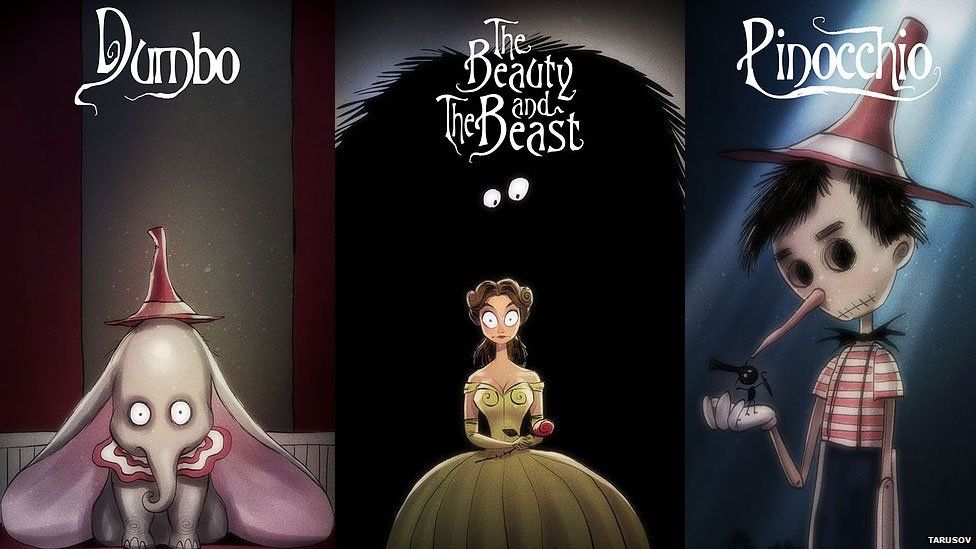
I stumbled upon this story on the BBC today: a Russian artist has reimagined classic Disney images in the haunting style of Tim Burton. The article says Burton is directing a live action remake of Dumbo, which I had no idea was in the works, but I can certainly see that coming together incredibly well; circuses have the classic creep factor about them, and I'm sure Burton will maximise on this!


Read the story above to see all the artwork. I think my favourite is the header image of Rafiki holding Simba aloft on that weird tree from A Nightmare Before Christmas - perfect!

Monday, 26 October 2015

Hans Christian Andersen Fairy Tale Course

It has already been widely circulated in the fairy tale blogworld that Future Learn are running a free academic course on the fairy tales of Hans Christian Andersen, facilitated by The Hans Christian Andersen Centre at the University of Southern Denmark.

There's still time to sign up to the six week course; I'm playing catch up at the moment and all the indications I've had so far suggest to me it will be very interesting! There are some longer writing assignments to complete, and I will probably post them and my responses to discussion stimuli here.

If you join me, I look forward to a good old chinwag and a debate or two!

HCA reading to children. By Elisabeth Jerichau-Baumann. Source.

Friday, 9 October 2015

As We Approach 30: The Potter Generation

When my dad first arrived in England, the question he was asked by all of his peers was 'Beatles or Stones?' The question that defined my generation, that formed humorous playground allegiances, was 'Gryffindor, Hufflepuff, Ravenclaw or Slytherin?'

It feels like a lifetime ago, but the Harry Potter world is still going strong with two plays and a film upcoming, and never-ending legions of new fans. And sandwiched in amongst the new young fans, the die hard superfans, and those who generally aren't too fussed but still aware, lie us: The Generation. Some of us of course fit into the above categories, but most of us just are, going through life, but having spent our formative years surrounded by the magic of Hogwarts. This isn't a claim on a title or an assertion of some sort of privilege. It just is.

~&~

These thoughts have been composting in my mind since a couple of weeks ago, when I happened to notice the Internet had started crying hysterically because J.K. Rowling's previously-interactive site Pottermore had changed format. Curious, I clicked through a few links to see what the fuss was about. There were a lot of reactions that were angry, to put it mildly, but in a way that felt intensely personal ('I'm not in my House anymore! I've lost my username! How could she do this to us?!') with the incensed voice of...well, the more 'rabid' of the fan species.* So I visited Pottermore and saw that, yes, these people were right and I was no longer a Ravenclaw.

But one of the first things I found on the site instead was The Pottermore Correspondent's experience of the September Screenings at the studio tour, and it felt like I'd stumbled into the eye at the centre of the hurricane. Here she was with a bunch of other twenty-somethings, 'The Potter Generation', not hurling abuse at a computer screen, just enjoying some lighthearted-deep-and-meaningful (yes I'm aware of what I'm writing) movie magic. It got me thinking: as we've gotten older, how has Harry Potter really influenced our lives?

by helina01 at devaintART

There is some disagreement about who classifies as 'The Generation', but generally, if you were growing up with the books and waiting impatiently for the next one to be released - you're it. It wasn't something we could devour in one mass read-a-thon and then obsess maniacally over. Sure, we were perfectly capable of becoming obsessed, but the stories didn't catapult into our lives all at once so our fascination was future-oriented, endlessly speculating over what would follow rather than on all that had come before (though that naturally formed part of it). The books exploded in one by one then seeped into our bones, a single firework bang with the sparks raining down afterwards.

I was seven when I read the first book, and I was hooked immediately. The second book had already been released at that point, but after that I was playing the waiting game along with everyone else. I was a few years behind the action taking place in the series, but 'reading up' is the norm for children, and I was most definitely looking up to the books; seeing the bravery, intelligence and love develop felt like something worth aspiring to, and (laugh/gag if you will) made me feel hopeful about the future.

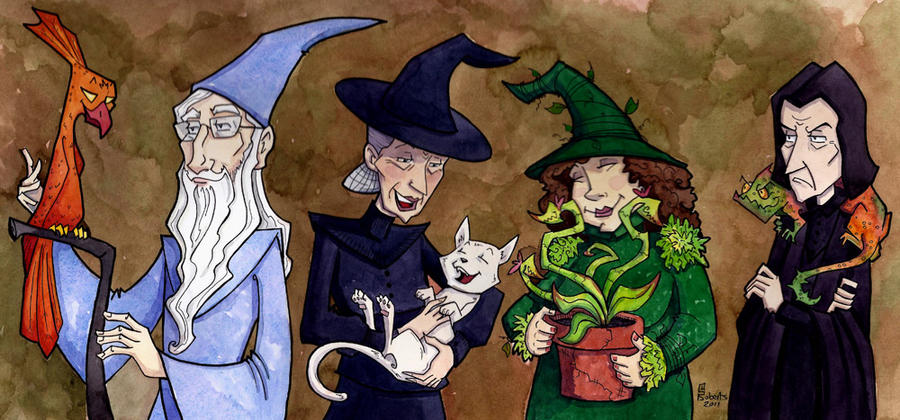
Thank you to the (real life) adults who joined us on our magical journey. Picture by CorinneRoberts at dA

Youth was a necessary prerequisite for membership in The Generation, but the adults were walking with us, just off the path. They knew how important the books were for us - these adults that were divided by Beatles and Stones or whatever the dividing lines were in the subsequent decades. My mum would always pre-order a copy of the latest book for the day it was released, then spend the entire day watching the clock as my brother and I took turns reading. It was understood and accepted by my parents that I would set my alarm for 3 a.m. to finish the book before school the next day; and there, teachers overlooked the students who slumped in their seats and could barely keep their eyes open. I was forgiven for not doing any violin practise the week the sixth book was released; in fact I didn't even open my case during the lesson, and spent 30 minutes arguing with my teacher over Snape's motives and what it could possibly mean for the final instalment. Fast forward a few years and during one particular enthusiastic discussion on critical literary theory at university, the professor didn't even raise an eyebrow when we started comparing Harry Potter to Aristotle. Talking about it in this setting felt as natural as breathing.

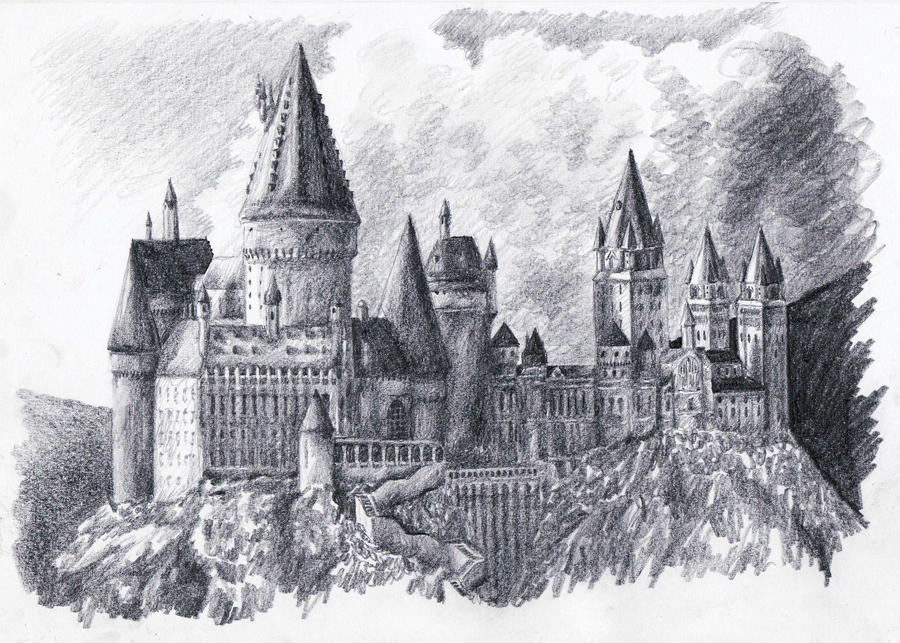
I'm sure higher education would have been even more inspiring in a castle. Hogwarts drawing by matsuo1326 at dA

So what else has become of us as we moved into adulthood? One interesting study into media consumption and politics suggested that, "Reading the [Harry Potter] books correlated with higher political tolerance, less predisposition to authoritarianism, greater support for equality, and grater [sic.] opposition to the use of violence and torture." All of these are very recognisable themes throughout the series. We are also the generation that grew up alongside the Internet and social media, with access to knowledge and news about current global political turbulence and suffering instantaneously, so to have such values instilled as we came to see all this was and is incredibly important. So, keep reading. 

Image Source
Unless you are one of the mega fans, approaching 30 it is unlikely Harry Potter still consciously features in your life much. But perhaps, occasionally, there's a piece of news from the Wizarding World that catches your eye. You smile fondly, maybe feel a tiny knot of excitement in your chest that recalls the feeling you had when you held the latest book in your hand for the first time - recalls, but could never replace.

"The stories we love best do live in us forever." said Rowling at the final premiere, and I whole heartedly agree. I carry with me so many words, places and characters that have all meant something to me and give me feelings of joy, pleasure and comfort. As I approach 30 I still dream of ginger beer on my hikes, wonder about wolves in the woods, and reach through to the backs of wardrobes, just to check. But this is the literary world I grew up with, so, for example, I wasn't too surprised when I was eating a pear a few months ago, and suddenly remembered that you can tickle a pear in a portrait of a fruit bowl to gain entry to the Hogwart's kitchens. 'Oh yeah,' I thought, and got back to whatever I was doing.

"It does not do to dwell on dreams and forget to live." said Albus Dumbledore in Philosopher's Stone. This is what we had to learn as Harry Potter weaved in and out of our childhood and teen years.** But I also think Dumbledore got it very right in the final book:

"Of course it is happening inside your head, Harry, but why on earth should that mean it is not real?"
by xXcherushiiXx at dA

End note: if this has brought up any traumatic memories from the past, Pottermore has very helpfully published 'How to deal with life when you've just finished reading Harry Potter' that may help you to work things through.

~&~

*I've not got anything against superfans. We've all been one at some point, for something. And a lot of the time superfandom is a representation of a deep emotional attachment to something important to you: that's not a bad thing. This comment is merely an observation of the seemingly more shallow side of things, which I judged based on CAPSLOCK and !!!!!!!! use.

**It occurs to me that this is the choice of inspirational quote that I put on my 'about' page. Ha! Well that just goes to show...

Sunday, 30 August 2015

Song of the Sea: Silence, Suffering, and Sibling Bonds

Note: I began writing about the voices of Saoirse and Ben before my computer crashed and died, and I only discovered recently that I hadn't lost all my work (hurray!) However, the film is no longer fresh in my mind and my train of thought has very much been broken, so I apologise if my thoughts do not seem so fully formed. Also, this will contain spoilers.

*--------*


There is a lot of buzz about Song of the Sea at the moment, and rightly so: it is rich in folklore, deeply emotional and visually stunning - not that you would expect anything less from the creators of The Secret of Kells.

I will straight up admit that I am somewhat biased with my adoration of this film, because selkie tales in any form fascinate me. But Song of the Sea...it just 'got me' in that way that art grabs you sometimes. Certainly this was partly down to the distinctive artistic style, transporting us through the tale in a gentler way than the bright and flashy 3D animation we are used to these days. That haunting melody also completely captivated me. It gave me shivers.

But the film lingered with me, and made me think a lot more than most films about what it could be saying, and the wider issues it brought up for me.


One thing I was particularly interested in was the significance of Saoirse being unable to speak. Her silence is integral as a plot device because it gives Ben's human voice more importance in the world of faerie, but I'm curious about what it means symbolically too. The two relevant tales that spring to mind are Six Swans or Twelve Brothers, where a sister must not utter a word while she sews shirts made of nettle leaves in order to restore her brothers to human form; and of course The Little Mermaid, who trades her voice for legs in order to be with the man she has fallen in love with.

Both the sister in Six Swans and Andersen's Little Sea Maid are also in a state of constant pain along with their silence, the sister from handling nettle leaves and the sea maid from walking as if on knives. Although Saoirse is sick later on in the film, that particular physical suffering isn't part of the condition with the silence - I believe her pain is internal, from not knowing who she is or how to belong. She is a young girl who doesn't understand why she is different (a mythical struggle) or why her brother resents her and her father sends her away ('mundane', family struggle). Like the heroines in the other tales it is great love that spurs her on in her silent pain to overcome these challenges, and it isn't until the end when she reconciles with her mother and is able to make a decision of her own to remain with her father and brother that she begins to speak more freely.

Saoirse's freedom of choice is the big thing that differentiates her from the other two heroines, who both freely enter into magical contracts that require transitioning into their silence and pain from previous states where they enjoyed the reverse. Although these contracts have been interpreted in completely contrasting ways as signs of strength of will or symbols of female subservience, I think the lack of this initial reversal means we can overlook both of these in Saoirse's case if we choose: we can view it as growth, as a coming into the true self, and moving from a state of ignorance to knowledge of oneself and one's position in the world/family. 


Ben's voice is mistaken for the selkie's

Saoirse's silence allows the siblings to embark on the adventure together on a more even ground: she is a mythical creature who cannot speak and doesn't know the songs and stories she is expected to know, while Ben is a mundane creature with the faerie knowledge his sister requires. They are yin and yang, opposites that combine in a perfect whole.

His knowledge is also what keeps him safe. Selkie mother notwithstanding, Ben is a human child and would not under normal circumstances have such 'safe' access to the world of faerie, because, as well we know, fairies are dangerous and fickle creatures and an encounter with them can be deadly.


Anybody with a brother will have this family photo!

The human story of family ties and tragedy intertwines beautifully with the traditional folkloric elements, and you don't need to be an expert in Irish folklore to understand that. Selkie and water spirit tales often involve tragedy and heartbreak, and looking at Ben, I wonder if selkies are able to better connect on an emotional level rather than a purely imaginative level with children today in comparison to your classic wolves, witches and fairies. 


Ben's voice seems to be the voice of folklore in modern times, recalling the stories nostalgically at the same time as they breathe life into a new story, and a new moment of existence. His voice speaks for Saoirse, for the memory of his mother, but it is also our voice and the subtle reminder that we are constantly in dialogue with these tales, weaving them into our modern existence one way or another.

Tuesday, 25 August 2015

Marina Warner speaks at the Edinburgh International Book Festival

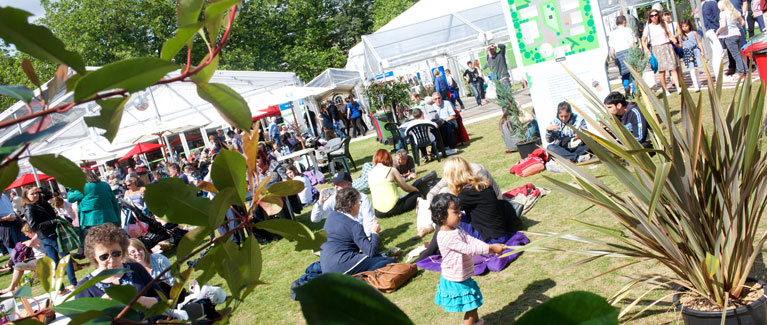
Today I had the great privilege of hearing Marina Warner give an inspiring and engaging talk on The Fairy Way of Writing as part of the Edinburgh International Book Festival. The event was sold out, and a diverse queue of people had already snaked around half of Charlotte's Square, home of the festival, when I arrived. Conversation in the queue was excited, lively and intelligent, and at the end of the talk audience members asked very insightful questions; I don't think I've ever been in a room full of so many people passionate about fairy tales. What a buzz!

crowds gather in Charlotte's Square at the Edinburgh International Book Festival
Charlotte Square. Image source: Edinburgh International Book Festival
After a glowing introduction, Warner began by talking about the 'territory of enchantment' and the language of imagination. She highlighted the importance of children in the transmission of stories, as historically they would have been the ones to more easily pick up new languages and introduce their stories to the new places they arrived in. The transmission of fairy tales can be mapped like trade routes in this way. And yet, despite this, it is impossible to know how and where they started.

She played us a beautiful ballad by Emily Portman, 'Two Sisters' (The Glamoury, 2010) based on the story of the singing bone. This was used to show that the story itself is not only a fairy tale, but the singing bone (in the form of a harp) is transmitting its own fairy tale, sharing its learned experience to a new audience. The act of the tale within the tale itself.

Warner took us on a whirlwind journey through time to link the tales to the tellers and the situation of the telling, from the 15th century, through the familiar names of d'Aulnoy, Perrault, Grimm (and most pertinently to her audience today, Lang) right up to the present day where we have women at the helm in Disney's animation studios. Particular note was given to Jennifer Lee, screenwriter and co-director of Frozen.

girls react positively to female empowerment messages in Frozen
image source: incredible gifts

Some good points were made about Frozen; it is the highest grossing Disney film of all time, and girls have reacted positively to the messages of female solidarity. I do wonder why, then, we're still seeing the girls dress up and idolise Elsa rather than Anna (the rescuee rather than the rescuer) ...but then my less sceptical side reminds me that Elsa has magic powers, and that must be pretty awesome and factor into the equation somewhat!

One thing I never would have expected was an interpretation of Frozen as a commentary on our state of mind in the digital age. Elsa is stuck in the idea of her own image, and that limits her abilities socially (like the obsession with how we come across on social media platforms such as Facebook) until with a little bit of passion and dynamism she is able to live life fully in the moment (not worrying about how it will later look uploaded!) and she thaws and is able to enjoy herself more because of it.

platform 9 3/4 is the gateway to the territory of enchantment and wonderment in the universe of Harry Potter
image source: collider
I was also pleased to hear her critique Richard Dawkins and his comments last year, when he berated parents for reading fairy tales to children. You can read her full counter attack on The Observer website. Without going into that argument (we've all done it already), Warner reiterated her counter argument on behalf of team fairy tale perfectly: we don't all go and queue up in King's Cross Station because we believe that if we push that luggage cart handle we'll be transported to Platform 9 3/4; we do it because we believe it will be fun to pretend.

And it is that belief that makes us come back time and time again to the territory of enchantment and wonderment. We may not know how it started, but I'm pretty sure it will never end.